

Skills & Trainings
Building Skills for Austria’s Semiconductor Future
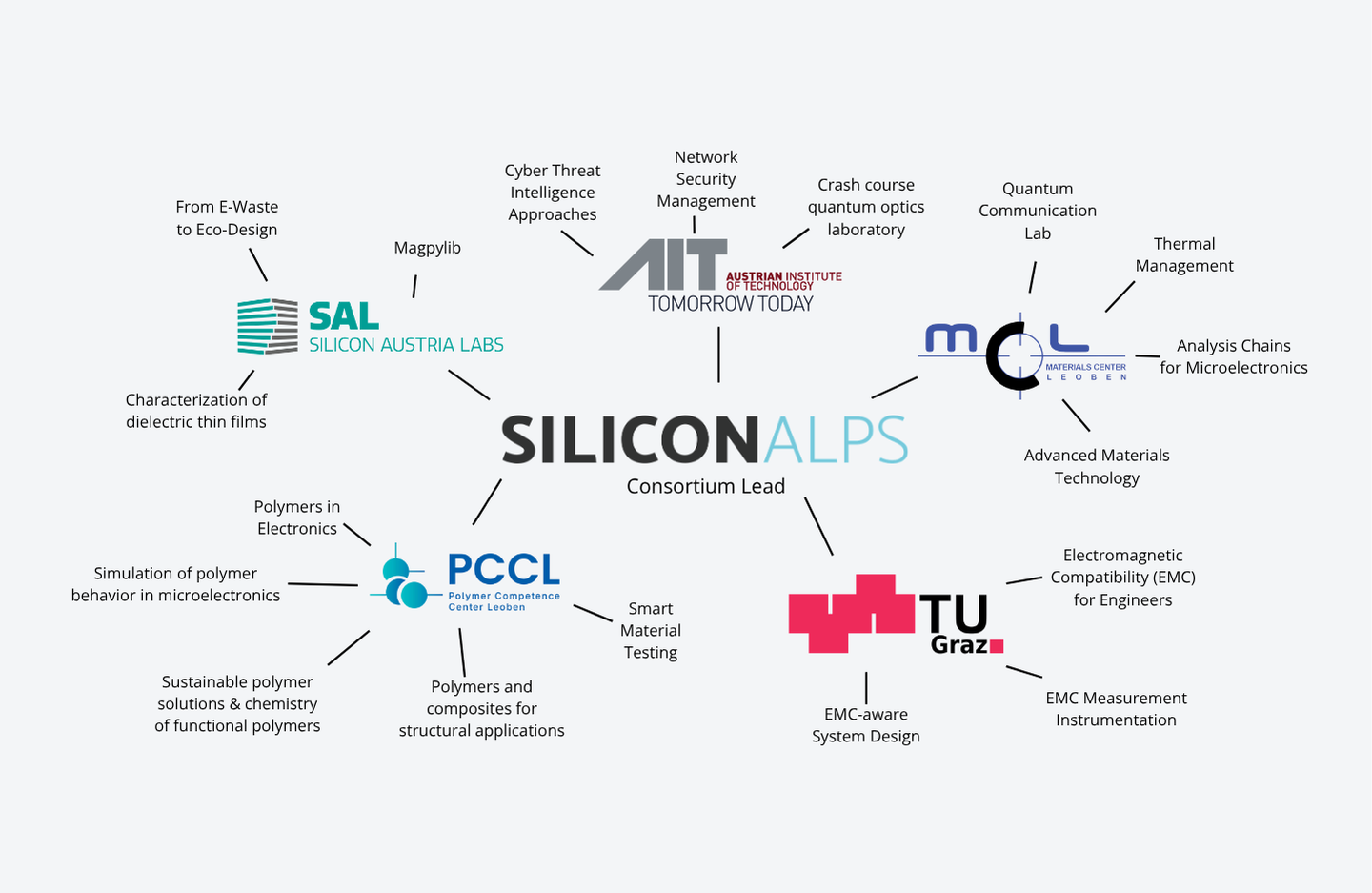
Develop the skills needed for tomorrow’s semiconductor and microelectronics industry. AT-C³ brings together expertise from leading Austrian research and technology organisations to provide online courses, workshops and training opportunities for industry professionals, researchers, start-ups and SMEs.


Connecting Expertise with Industry Needs
AT-C³ develops training based on the evolving needs of Austria’s semiconductor and microelectronics ecosystem. Our partners combine expertise across the semiconductor value chain to provide accessible, practice-oriented and industry-relevant learning opportunities – helping professionals and organisations build the skills they need for current and emerging technologies.
Part of a European Skills & Innovation Ecosystem
AT-C³ is connected to the wider European semiconductor ecosystem through aCCCess , linking the network of 30 Chips Competence Centres, 6 Pilot Lines and the European Chip Design Platform established under the Chips for Europe Initiative.This European network provides access to complementary expertise, infrastructure and training opportunities across Europe. By connecting Austrian activities with European offers, AT-C³ can share knowledge, identify complementary training opportunities and avoid unnecessary duplication.For learners and companies, this means access not only to AT-C³ training, but to a growing European ecosystem of semiconductor expertise.
Our Training Topics
AT-C³ partners contribute their specialised expertise to a growing training portfolio covering key areas of semiconductor and microelectronics technology.Current and planned topics include electromagnetic compatibility, polymers and advanced materials, thermal management, thin-film technologies, cybersecurity, quantum technologies, photonics, simulation and sustainable electronics.Our portfolio will continue to evolve in response to identified industry needs and emerging skills gaps. Where additional expertise is required, AT-C³ can complement the consortium’s training activities by involving external experts and training providers.
Electromagnetic Compatibility for Engineers
Are you an engineer who wants to work with electromagnetic compatibility, but do you lack the skills? Then this course is for you!
Targeted at working enginners, we have build this course to help you and your company succeed.
Although the target group is working professionals, master and PhD students will benefit as well.
This course is developed by the Institute of Electronics at Graz University of Technology.
Scope: 9 Units
Language: English
Duration: 4 hours/unit
Course start: 1. October 2026
Current Status: Running
License: CC BY 4.0
Certification: Certificate of Attendance
Magpylib: Magnetic Simulation in Python
Ever wanted to simulate magnetic fields with just a few lines of code?
We’re thrilled to share that we’re currently preparing a brand-new online training course on Magnetic Simulation in Python.
This course is developed by the Silicon Austria Labs.
Scope: 5 Units
Language: English
Duration: 1 hours/unit
Course start: 15 November 2026
Current Status: Upcoming
License: CC BY-NC-ND 4.0
Certification: Certificate of Attendance
Introduction into Open Source Analog Chip Design for Electronic Engineers
In this two-day hands-on workshop, you’ll go through the complete open-source analog IC design flow, from schematic simulation to layout, LVS, parasitic extraction, and post-layout verification. Using the IHP open PDK and the web-based BlueGarden EDA environment, you’ll build and validate a CMOS inverter and a ring oscillator with Xschem, ngspice, and KLayout. You’ll also get an overview of the global IC ecosystem and the role of open-source EDA alongside commercial tools. A live mixed-signal chip design demo rounds off the workshop.
This course is developed by Symbiotic EDA.
Prerequisites: Basic Linux Commands | Trained as electronics engineer understanding analog circuits | Understanding of CMOS circuits
Mode: on premise
Location: University of Technology Graz, Campus Inffeldgasse
Language: English
Duration: 2 days, 8 hours/day (incl. breaks)
Course dates: 24-25th of November 2026
Current Status: open for registration from 28th of October
Certification: Certificate of Attendance
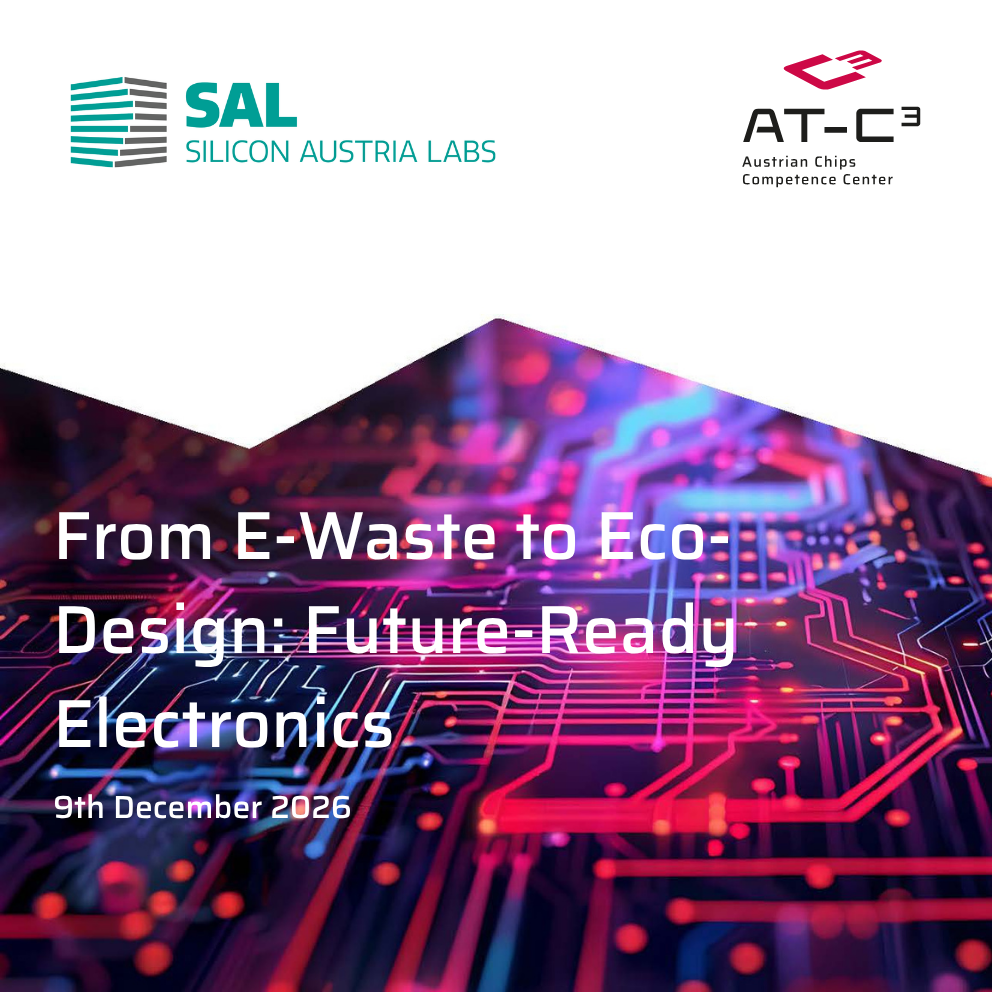
From E-Waste to Eco-Design: Future-Ready Electronics
How can we make electronics more sustainable, from design to end-of-life?
Join our training designed for students, researchers, engineers, and industry professionals interested in driving sustainability and responsible technology development.
Submit an expression of interest via the form by 30th October. Places will be allocated during the week commencing 2nd November.
Expression of interest does not constitute confirmation of attendance or guarantee a place on a course.
This course is developed by the Silicon Austria Labs.
Date: 9th December
Venue: Villach, Austria
Format: On-site | In-person
FAQs – Semiconductor Skills & Training
Developing the right skills is essential to keeping pace with advances in semiconductor technology. AT-C³ brings together education, practical training and industry expertise to help professionals, students and researchers build and strengthen their capabilities in microelectronics, chip design and semiconductor manufacturing.
The offerings include specialized continuing education programs, practical workshops, and courses in microelectronics, chip design, semiconductor manufacturing, and applied engineering sciences for professionals and emerging talent alike.
The courses are tailored for engineers, technicians, and industrial partners seeking to upskill or reskill their workforce, as well as for students and researchers in the semiconductor field.
By directly combining academic expertise with hands-on industrial practice and access to state-of-the-art research infrastructure, our programs build the key competencies mandated by the European Chips Act.