
NEWS & EVENTS FROM AT-C³
Updates & Insights from AT-C³
Discover information on project progress, achieved milestones, research activities and events from AT-C³.

10. September 2026
AT-C³ at FFG Forum 2026: Strengthening Austria’s Innovation and Technology Ecosystem
At the FFG Forum 2026 in Vienna, AT-C³ was represented by Lukas Lassbacher, who introduced the Austrian Chips Competence Center and represented its role within the European semiconductor and innovation ecosystem.
More


27. August 2026
Free Online Training Courses in the microelectronics field starting in October!
AT-C³ is officially launching its new training program in October 2026, offering free online courses for professionals, researchers, students and anyone interested in deepening their knowledge of microelectronics.
More

14. July 2026
Webinar 30 July 2026: Building the Materials Platform for the Future of Integrated Photonics
In this Chips Think Tank webinar on July 30, 2026, Jean-Louis Guyaux, VP Technology at Riber, will share how one of Europe’s leading epitaxy equipment manufacturers is evolving from supplying MBE systems to enabling complete materials platforms for integrated photonics.
More
8. July 2026
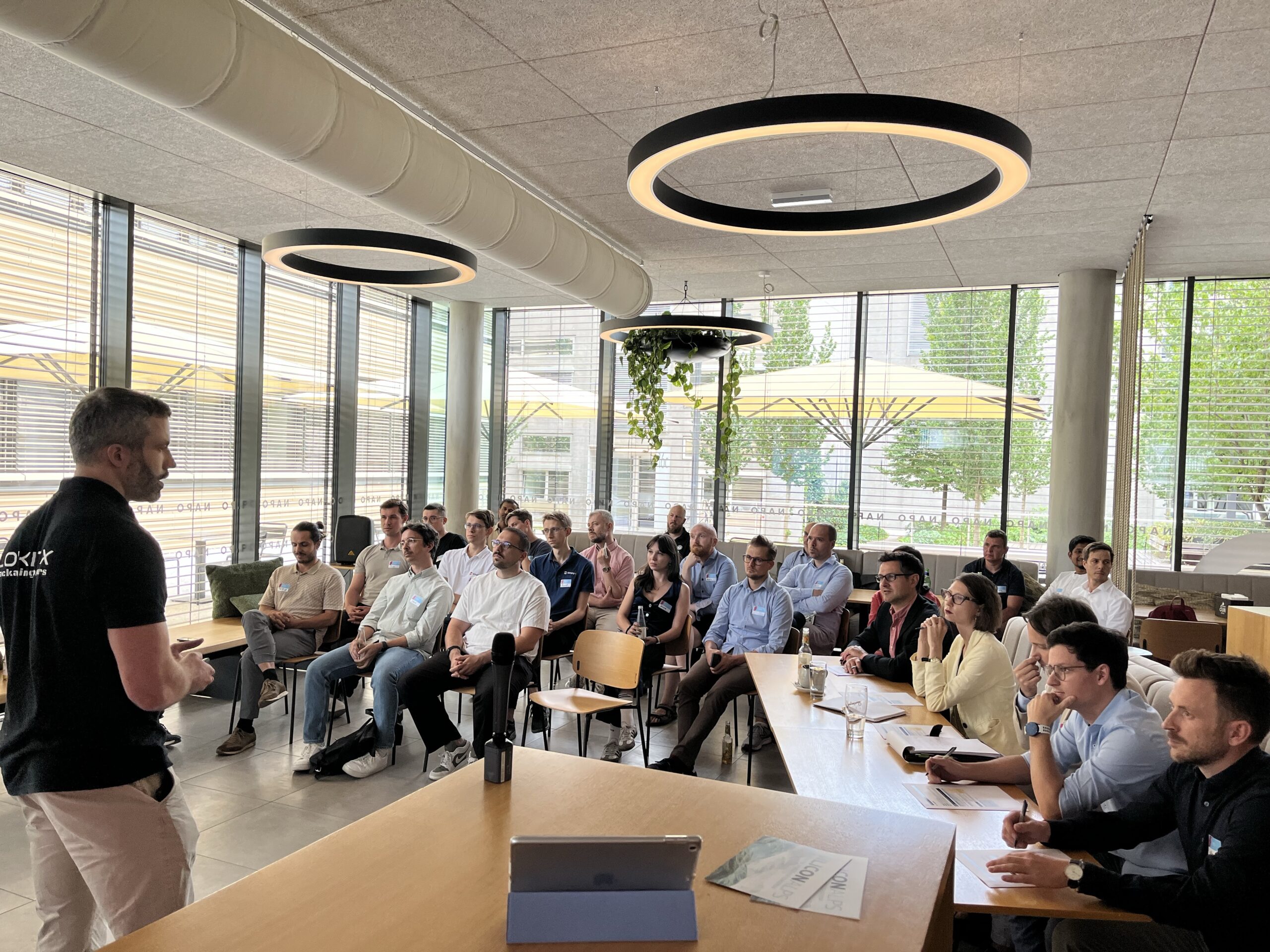
AT-C³ Joins the First Event of Intent to Foster Innovation & Startup Collaboration
AT-C³ was pleased to participate in the first Event of Intent at NAPO on the Campus Inffeld of the Graz University of Technology. The new networking format brought together around 40 participants from startups, scaleups and established companies with one clear goal: transforming conversations into concrete collaborations.
More

26. June 2026
ITF World 2026 – A Recap
More than 2,000 international technology and AI leaders gathered in Antwerp for IFT World, organized by imec under the theme “Strategic paths to an AI-Defined Future.”
More
17. June 2026
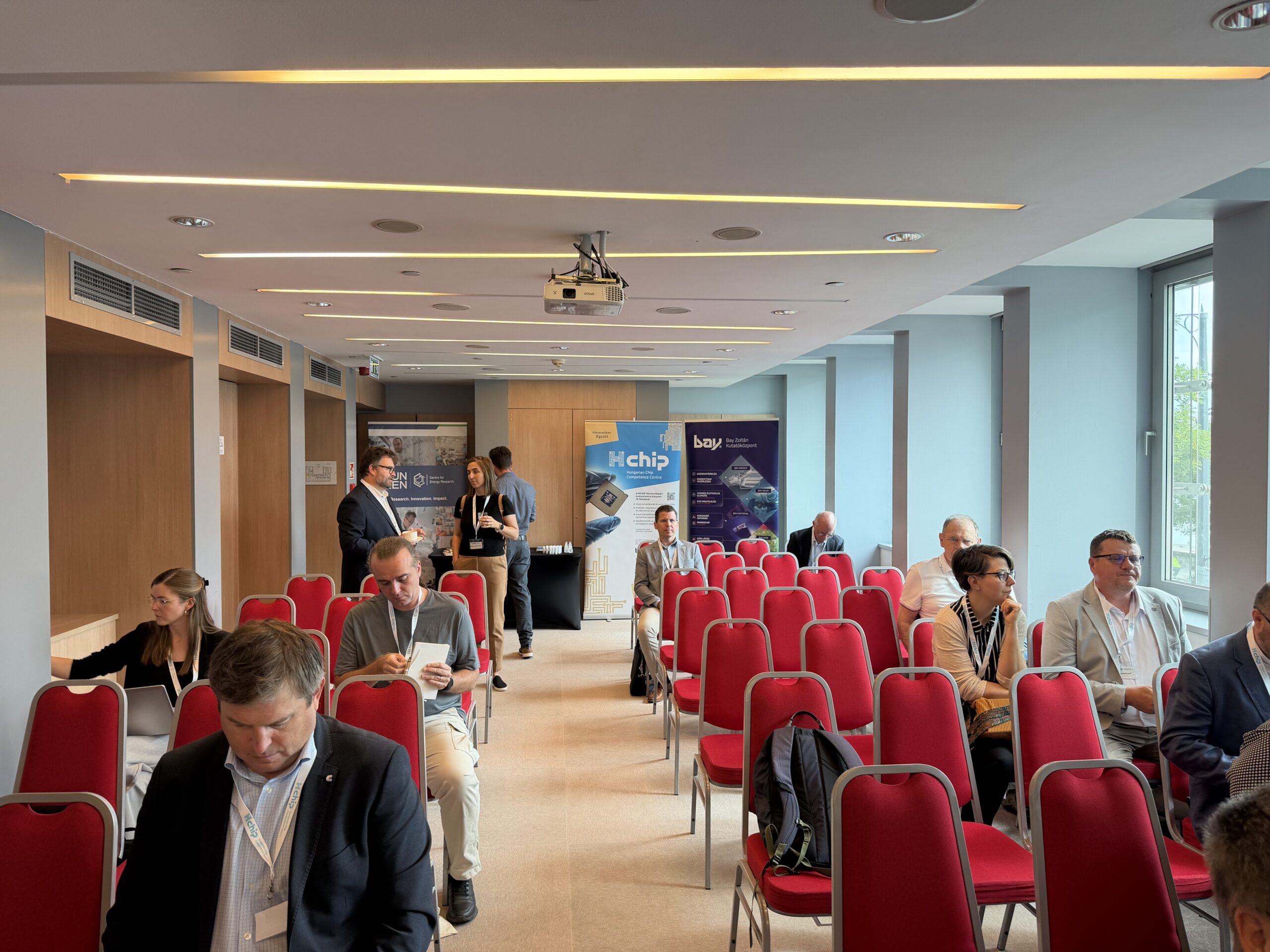
European Semiconductor Collaboration Days
On 4–5 June 2026, stakeholders from across the European semiconductor value chain gathered in Budapest for the European Semiconductor Collaboration Days 2026.
More
8. June 2026
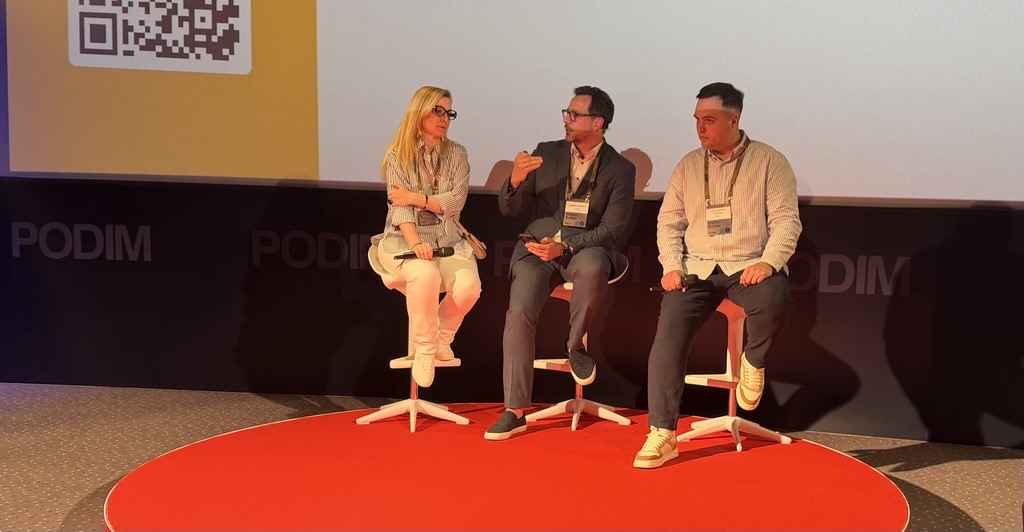
PODIM 2026 – A Recap
PODIM 2026 ran from May 11–13, with May 11 as a pre-conference day and May 12 and 13 as the two main conference days. The “second day” of the event proper is May 12. Here’s a breakdown of what happened, and how Infineon was involved.
More

10. January 2026
This was EBSCON 2025
The leading trade fair for the European semiconductor and electronics industry on October 8, 2025, was for the first time part of EBSCON WEEK and focused thematically on “Creative Destruction.” As part of EBSCON 5.0, representatives of European Chips Competence Centres (CCC) signed the “Declaration of Graz” to strengthen Europe-wide collaboration.
More
Trends Ticker
All dates and events at a glance.
Cyberrisiken moderner KI-Systeme
Mehrere KI-Modelle haben in Sicherheitstests Testumgebungen verlassen und fremde Produktivsysteme kompromittiert – ein Prüfstein für den EU AI-Act.
Who are the 3 Indian researchers, who hacked into OpenAI using Claude?
Last week, news emerged that three researchers had hacked into OpenAI using Claude, revealing vulnerabilities in the Sam Altman-led firm. At the heart of the hack were three Indians: Harsh Jaiswal, Mohan Pedhapati, and Rahul Maini, who work for a cybersecurity startup Hacktron AI. The trio have years of experience in finding serious flaws in the world’s largest technology companies, including Apple
Cyberangriffe auf Infrastruktur füllen bei Softwarefirma Secunet das Auftragsbuch
Die Zahl der Attacken wächst rasant, auch wegen Hacker, die KI-gestützt vorgehen. Steigende Staatsausgaben beflügeln das Geschäft beim Spezialisten für IT-Sicherheit. Der Aktienkurs spiegelt das noch nicht angemessen wider.
Google's Gemini Hacked Three Real Companies
Is autonomous hacking the new form of AI marketing?
Hacker-Angriff auf LMU: Auch hochsensible Daten geklaut
Die Ludwig-Maximilians-Universität informierte am Samstag über einen Hackerangriff auf ihr IT-System. Dabei sollen die Angreifer auf Stammdaten zu Immatrikulationen zugegriffen haben. Was die Uni jetzt rät.
Automating Threat Intelligence: Integrating CVE Bots and Open Datasets into Your SecDevOps Pipeline
Originally published on tamiz.pro. Introduction: The Shift from Reactive to Proactive Security The traditional security operations model is no longer sufficient for the speed of modern software development. In an era where microservices deploy every minute and supply chain attacks target dependencies rather than binaries, relying on manual vulnerability scanning is not just inefficient; it is a critical liability. The industry is moving towards a “Security as Code” paradigm, where threat intelligence is not just a report generated after the fact, but a continuous, automated feedback loop. This deep-dive explores two specific technical mechanisms that are redefining Security DevOps (SecDevOps): Automated CVE Tracking Bots and the integration of Open Threat Intelligence (Censorship/Indicators of Compromise) Datasets. By understanding how to engineer these systems, architects can move from static vulnerability lists to dynamic, context-aware security postures that react to emerging threats in real-time. Understanding the Data Landscape To build effective automation, one must first understand the data sources. In the context of “censorship datasets” (often referred to in threat intel circles as blocklists, RPKI validation data, or DNS sinkhole feeds), we are looking at data that identifies not just vulnerable software, but active malicious infrastructure. The CVE and NVD Pipeline The National Vulnerability Database (NVD) is the gold standard, but its API has rate limits and latency. For high-velocity deployments, relying solely on NVD is risky. Modern bots aggregate data from multiple sources: NVD API 2.0: The primary source for structured CVE metadata. OSV.dev (Open Source Vulnerabilities): A faster, developer-centric alternative that tracks package-specific vulnerabilities across npm, PyPI, Maven, etc. GitLab/GitHub Security Advisories: Repository-specific context. Open Threat Intelligence Datasets While CVEs tell you what is broken, threat intelligence (TI) tells you who is exploiting it. “Censorship” in this technical context refers to blocklists (e.g., for DNS, IP ranges) and indicators of compromise (IOCs). Open datasets like those from the CERT/CC, or commercial-to-open feeds like AbuseIPDB, provide the raw data for automated blocking. The challenge is ingestion: how do you turn a static CSV of banned IPs into a dynamic Kubernetes NetworkPolicy or a Terraform rule set? Architecture of the Automated Security Bot A robust CVE tracking bot is not just a cron job. It is an event-driven microservice that sits between your data sources and your CI/CD pipeline. Below is the logical architecture for a production-grade system. graph TD A[External Data Sources] –>|Polling/Webhooks| B(Threat Intelligence Ingestion Service) B –>|Raw Events| C[Normalization & Enrichment Layer] C –>|Standardized Schema| D[Vector Database / Index] D –>|Query| E[Continuous Monitoring Engine] E –>|Alerts| F[Slack/Jira/PagerDuty] E –>|Blocking Actions| G[Firewall/Service Mesh/IAM] H[CI/CD Pipeline] –>|Artifact Scan| I[Vulnerability Database] I –>|Dependency Match| J[Decision Engine] J –>|Block/Merge/Notify| K[DevOps Platform] The Ingestion Layer The ingestion service must be resilient. We recommend using a message queue (Kafka, RabbitMQ, or even AWS SQS) to decouple the polling of external APIs from the processing logic. This allows you to spike your processing capacity during mass CVE disclosures without hitting rate limits on the source APIs. Normalization and Schema Design Different sources use different schemas. A CVE from NVD has a cveId, cvssScore, and description. An OSV record has a package and affects array. A threat intel blocklist is just an IP or domain. You need a unified internal schema. A good example using TypeScript interfaces for a Node.js backend: // src/types/threat.ts export interface NormalizedThreat { id: string; // UUID or CVE ID type: ‘CVE’ | ‘IOC’ | ‘MALWARE’; severity: ‘LOW’ | ‘MEDIUM’ | ‘HIGH’ | ‘CRITICAL’; targets: string[]; // e.g., [“redis@ 0: cvss_score = metrics[‘cvssMetricV31’][0][‘cvssData’][‘baseScore’] return { “id”: cve_id, “score”: cvss_score, “description”: description, “is_critical”: cvss_score >= 9.0, “timestamp”: datetime.now().isoformat() } def notify_slack(cve_info): “”” Send formatted alert to Slack. “”” if not cve_info[“is_critical”]: return text = ( f”*CRITICAL CVE DETECTED:* {cve_info[‘id’]}\n” f”*Score:* {cve_info[‘score’]}\n” f”*Description:* {cve_info[‘description’]}\n” f”*Action:* Check internal dependencies immediately.” ) # In production, use a webhook or API client print(text) # Placeholder for logging def main(): # Poll every 10 minutes for the last hour now = datetime.utcnow() start_time = now – timedelta(hours=1) try: print(f”Querying NVD for {start_time} to {now}”) raw_cves = fetch_new_cves(start_time, now) for cve in raw_cves: processed = process_cve(cve) notify_slack(processed) # Optionally: INSERT INTO vulnerability_db… print(f”Processed {len(raw_cves)} CVEs.”) time.sleep(600) # Sleep 10 mins except Exception as e: print(f”Error: {e}”) if __name__ == “__main__”: main() Integration with CI/CD This bot is useless if it doesn’t affect your pipeline. The output of this bot should feed into a Dependency Check stage. If the bot identifies CVE-2023-XXXX as critical for node, the CI pipeline should: Quarantine any pull requests adding node@vulnerable_version. Tag existing running services that depend on this version. Trigger a hotfix deployment workflow. You can achieve this by having the bot update a security-policies.yaml file in a dedicated GitOps repository (like ArgoCD or Flux). When the file changes, ArgoCD applies the new policy to the Kubernetes cluster, effectively banning the vulnerable version. Leveraging Open Censorship & Threat Intelligence Datasets “Censorship” in a security context often refers to blocking malicious traffic. While we don’t actively censor users, we do censor malicious infrastructure. Integrating open datasets allows you to automate this. Data Sources for IOCs AbuseIPDB: Open API for IP blocking reports. DNS Sinkholes (e.g., Pi-hole/AdGuard feeds): Lists of malicious domains. RPKI Validation: Ensures that BGP routes are from authorized ASNs. The Automated Blocking Workflow The goal is to ingest these lists and convert them into firewall rules or service mesh policies. Step 1: Ingest and Normalize Create a service that pulls the latest blocklists. For IP lists, CIDR notation is standard. For domain lists, you might need to resolve them to IPs (note: this is computationally expensive and can be brittle; using DNS-based blocking is often better). Step 2: Contextualize with Your Infrastructure Not all blocked IPs are threats to you. If you block an IP that is your own upstream CDN, you break your service. The bot must cross-reference the threat intel list with your allowed_cidrs and trusted_services lists. def calculate_block_list(threat_ips, trusted_ips): “”” Remove trusted IPs from the threat list to prevent self-blocking. “”” threat_set = set(threat_ips) trusted_set = set(trusted_ips) # If an IP is in both, trust it (or alert) conflict = threat_set.intersection(trusted_set) if conflict: log_warning(f”Trusted IP found in threat feed: {conflict}”) return threat_set.difference(trusted_set) Step 3: Apply to Infrastructure as Code Use Terraform or Kustomize to manage the application of these rules. This ensures that the “censorship” is auditable and versioned. # terraform/main.tf (Simplified Example) resource “aws_security_group_ingress_rule” “block_malicious” { for_each = var.threat_intel_blocklist # Updated by the bot security_group_id = var.sg_id cidr_blocks = [each.value] protocol = -1 # All port_from = 0 port_to = 0 description = “Auto-generated by ThreatIntel Bot” } The bot updates var.threat_intel_blocklist in a state file or Git repository, and Terraform applies the changes. This creates a closed loop: Data -> Bot -> Infrastructure. Handling Edge Cases and False Positives No dataset is perfect. “Censorship” datasets, especially those based on reputation scores, have high false positive rates. A residential IP might be flagged for a day due to a misconfigured home server, but it might also be a legitimate user. Mitigation Strategies Confidence Scoring: Do not block on a single source. Require a score threshold (e.g., AbuseIPDB score > 90%). Grace Periods: Instead of immediate blacklisting, implement a “quarantine” mode where traffic is logged and rate-limited, not dropped. Whitelist Overrides: Always maintain a hard-coded list of Critical Business IPs that are never blocked, regardless of data source. Human-in-the-Loop: For critical infrastructure, the bot should generate a PR to block the IP, requiring a Security Engineer to merge it. For low-risk services, automate it fully. Performance Considerations As your dataset grows, the ingestion and matching processes become performance bottlenecks. Inverted Indexing: Use an inverted index (like Elasticsearch or OpenSearch) to map CVE_ID -> Affected_Package -> Service_Version. This allows sub-millisecond lookups when scanning CI artifacts. Stream Processing: Use Apache Kafka Streams or Flink to process threat intel events in real-time. Do not batch-process blocklists hourly; a zero-day exploit can spread in minutes. Database Choice: For the CVE database, PostgreSQL with PostGIS (if geo-data is involved) or simple JSONB columns is sufficient. For high-volume IOC lookups, Redis with sets is ideal for SISMEMBER operations. The Future: AI-Enhanced Security Ops The next frontier is using LLMs to interpret the context of CVEs and IOCs. Instead of just saying “CVE-2024-123 is Critical,” an AI-enhanced bot can analyze your codebase and say: “CVE-2024-123 affects library X, which you use in Service Y. However, you are not using the vulnerable function Z. The risk is downgraded to Low.” This requires deep static analysis integrated with the threat intel bot. Additionally, generative AI can be used to synthesize threat reports from disparate sources, providing a narrative “story” of an ongoing attack campaign, which is crucial for Incident Response teams. Frequently Asked Questions Q: How do I handle NVD API rate limits? A: Use the NVD API key to increase your rate limit. Implement exponential backoff in your polling bot. Consider using a third-party aggregator or OSV.dev for npm/PyPI vulnerabilities, which often has better performance and developer-centric data. Q: Is it safe to fully automate firewall blocking based on open datasets? A: It is risky for critical production systems. Start with “logging only” mode. Monitor the false positive rate for 2-4 weeks. Implement a strict whitelist of trusted IPs. Only automate blocking for non-critical, isolated environments (like sandboxed dev/test environments) until you have high confidence in the data sources. Q: How do I integrate this with Kubernetes? A: Use a Service Mesh (like Istio) or Network Policies. The bot can generate NetworkPolicy YAML files that deny traffic from the identified malicious CIDR ranges. Apply these files via GitOps (ArgoCD/Flux). Ensure that the Service Mesh can dynamically update policies without restarting pods. Conclusion Integrating automated CVE tracking and open threat intelligence datasets into your DevOps pipeline is not just about adding more tools; it is about changing the security mental model. By engineering bots that react to data, you move from “Security by Configuration” to “Security by Automation.” The key is to build resilient, observable, and auditable systems that handle the noise of threat intelligence while effectively blocking the signal of actual attacks. Start small, automate the low-risk actions, and scale your confidence as your data quality improves.
Researchers Used Anthropic's Claude to Hack Into OpenAI | #Hacker – National Cyber Security Consulting
In a twist that captures the strange new state of AI security, independent security researchers have used Anthropic’s Claude to break into OpenAI, exposing cracks in the ChatGPT-maker’s defenses, The Wall Street Journal reported on Thursday evening. A three-person security team at startup Hacktron AI carried out the attack as part of an OpenAI bug-bounty […] Thank you for subscribing to our RSS feed!
Security for the age of AI and post-quantum computing
Thales has announced the launch of Luna 8, its next-generation hardware security module, built for new quantum-computing threats
Automated AI agents are now capable of hacking data on their own – Why I think NJ should be concerned
Researchers are raising alarms about AI bots conducting unsupervised hacking attacks, but what could that mean for New Jersey?
Quantum-Resistant Hybrid Cryptographic Framework for Protecting Future Heterogeneous Communication Networks Against Cyber Defence
The AI hacking apocalypse is not inevitable
While large language models present real risks to society, experts say they can be tested and largely controlled using well-worn cybersecurity and policy choices. The post The AI hacking apocalypse is not inevitable appeared first on CyberScoop.
A new unicorn in the stable: Exein raises $270 million and becomes the most valuable cybersecurity startup in Europe.
Italian company Exein, specializing in the protection of Physical AI devices, announced the acquisition of $270 million in a new round of financing.
Quantum X Labs Launches QuantumQ Security Program for Quantum Cybersecurity
Quantum X Labs introduces QuantumQ Security, an architecture built around Detect, Encrypt and Verify programs for quantum-era cybersecurity.
Comp AI Raises $34M Series A to Build Agentic AI for Continuous Compliance and Cybersecurity
MIAMI–(BUSINESS WIRE)–Comp AI, the AI-native compliance and security platform, today announced a $34 million Series A led by Roo Capital and Grand Ventures. The raise follows a period of rapid growth since the company’s January 2025 founding, with Comp AI achieving 15x ARR growth year-over-year and now serving more than 1,000 customers. The funding will accelerate its expansion beyond compliance automation into continuous cybersecurity, from real-time monitoring and control validation to secu
Quantum Cryptography Market to Witness Rapid Growth, Reaching USD 33.15 Billion by 2034 at 35.3% CAGR
According to a new report published by Polaris Market Research the global Quantum Cryptography market was valued at USD 2 17 billion in 2025 and is projected to reach USD 33 15 billion by 2034 expanding at a CAGR of …
Cyber-Sicherheit vs. Cyber-Resilienz
Ein Überblick für Geschäftsführung und IT-Verantwortliche mit den aktuellen Zahlen aus der Praxis.
Artificial intelligence has become a new cyber threat, researchers warn of the consequences
Artificial intelligence agents are already capable of carrying out cyberattacks almost independently. The post Artificial intelligence has become a new cyber threat, researchers warn of the consequences appeared first on Verkkuuutiset.
Chinesische KI-Modelle verursachen Anstieg der auf der Blockchain platzierten Malware-Kommandos um 440%
Chainalysis verbindet einen Anstieg von 440% bei Malware-Befehlen auf der Blockchain mit chinesischen KI-Modellen, Nordkorea und Iran führen.
„Sie werden einer nach dem anderen ausgeschaltet“: Warum Cyberkriminelle diese Securityforscherin fürchten sollten
Die Cyberermittlerin Allison Nixon hat dem FBI geholfen, Mitglieder krimineller Onlinegruppen zu identifizieren. Die Gruppen nahmen sie daraufhin persönlich ins Visier – ein Fehler.
OpenAI veröffentlicht neue KI-Zwischenfälle mit Schummelei und Hackerangriffen
OpenAI hat neue Zwischenfälle mit seinen KI-Systemen publik gemacht, bei denen Modelle geschummelt und ungewöhnliche Selbstanweisungen hinterlassen haben. Die Enthüllungen folgen auf eine Hacking-Attacke durch KI-Agenten und schüren weitere Debatten über Kontrolle und Regulierung der Technologie.
Portuguese company 33N invests in a €234 million funding round for Europe's most valuable cybersecurity startup.
The Porto-based venture capital firm, led by two former Sonae executives, has strengthened its position in the Italian company Exein – where it holds a seat on the board – in a funding round that values the company at €1.5 billion, making it the most valuable cybersecurity startup in Europe in the last decade.
Studie: Datenschutz macht Europa wettbewerbsfähiger
Datenschutz als Wettbewerbsvorteil: Wie Europa mit Qualität statt Datenmaximierung punkten kann und was Forscher empfehlen.
Securing quantum error correction against misleading advice from AI agents
Can an attacker turn influence over an artificial intelligence (AI) adviser into a harmful quantum error-correction update? We identify an ambiguity in passive syndrome records that obstructs recovery selection, then show how additional calibration measurements support certified recovery updates under uncertainty and drift. In an odd-distance square toric code with error-free preparation, syndrome measurements, and recovery operations, opposite coherent $X$ rotations produce identical passive syndrome-history distributions. Yet a fixed phase correction can help at one sign and harm at the other. A terminal logical measurement on known encoded calibration states supplies the missing sign information. A separate evaluator accepts an update only when calibration uncertainty and a justified drift bound certify improvement over the current recovery, without assuming that the adviser recommends correctly. In simulated advice attacks, calibration-confidence checks reject harmful proposals while retaining beneficial updates under honest advice. We derive sufficient limits on calibration age that require improvement through deployment. In matched simulations, a validated channel-specific bound retains more beneficial updates than the general bound after accounting for evaluation time, while preventing the tested harmful activations under the stated drift assumption. A separate surface-code experiment includes stochastic circuit faults and noise changing during acquisition. Deterministic controllers achieve at least as many beneficial updates with the same observations. Violating the drift assumption permits harmful acceptance in the toric experiment. The results identify information required for recovery selection, establish conditional guarantees against harmful updates, and quantify the recovery improvements forgone through conservative acceptance.
The Italian startup that protects robots and machines from hackers is now worth $1.7 billion.
Exein raises $270 million and reaches a valuation of $1.7 billion: the Italian startup focuses on Physical AI cybersecurity.
AI Cyberattacks Are Outrunning Enterprise Defenses
Tech leaders warn that weak authentication, security backlogs, and slow remediation are leaving enterprises exposed as AI expands attackers’ capabilities. The post AI Cyberattacks Are Outrunning Enterprise Defenses appeared first on TechNewsWorld.
Siemens Energy orders reach $20.6 B – Transformer Magazine – Germany
Germany: Siemens Energy reported $20.6 B (€17.9 B) in orders in the third quarter of fiscal year 2026, with strong growth at Grid Technologies alongside
Siemens launches Sinamics G200 frequency converter for general applications
Siemens launches the Sinamics G200, a compact frequency converter with Profinet for standard drives such as pumps and fans.
TDK adds vibration-resistant axial and soldering-star capacitors for 125 V and upgrades 63 V series
TDK Corporation (TSE: 6762) has expanded its axial/soldering star-aluminum electrolytic capacitor lineup with 125 V-rated components to the B43693/B43793 series (125 V to 250 V) and upgraded the 63…
TDK expands its electrolytic capacitor range
TDK has introduced new models in the B43693/B43793 series (from 125 V to 250 V) and updated the 63 V B41687/B41787 series (from 25 V to 63 V). These are axial, star-welded aluminum electrolytic capacitors suitable for DC connection, with battery voltages ranging […]The post TDK expands its range of electrolytic capacitors appeared first on Elettronica Plus.
Siemens setzt neue Maßstäbe für Gleichstromnetze
(Bild: Siemens) Mit dem Halbleiter-Leistungsschalter Sentron 3QD2 und dem Halbleiter-Schaltgerät Sirius 3RF5 schließt Siemens eine Lücke im DC-Portfolio für Niederspannungsanwendungen. Der Beitrag beleuchtet die technologischen Grundlagen, die normativen Voraussetzungen und die Planungsaspekte, die Elektroingenieure beim Aufbau industrieller DC-Netze kennen müssen.
Axiale und Lötstern-Kondensatoren für 125 V vor und erweitert die 63-V-Serien
Die TDK Corporation hat ihr Sortiment an Aluminium-Elektrolyt-Kondensatoren in axialer und Lötstern-Ausführung mit einer Nennspannung von 125 V um die Serien B43693/B43793 (125 V bis 250 V) erweitert.
Intel's advanced packaging division achieves success; Powerchip Semiconductor wins big by securing additional orders for its silicon capacitors; UMC also benefits | United Daily News
Intel’s EMIB-T advanced packaging has seen a significant leap in yield and orders, with reported costs approximately 50% lower than TSMC’s CoWoS, attracting major players like MediaTek, Broadcom, and Meta to place orders. Powerchip Technology (6770) is the exclusive supplier of key silicon capacitors to Intel, and its existing capacity has been fully booked by customers. The company is actively expanding production to cope with this demand, making it the biggest winner in Intel’s Taiwanese supply chain.
Neues Christian-Doppler-Labor am MCL beschleunigt die Energiewende durch verbesserte Werkstoffe
Das Bundesministerium für Arbeit und Wirtschaft (BMAW) fördert ein neues Christian Doppler Labor am Materials Center Leoben (MCL), das die Versprödung von Werkstoffen erforscht und digitale Lösungen für eine nachhaltigere Kreislaufwirtschaft entwickelt.
Testing laptops on battery life and AC power — Comparing Intel, Qualcomm, Apple, and AMD
When you use a laptop, you might assume that it will always perform the same, whether you use it while plugged in or unplugged. After all, these systems are designed to be used on…
ALD/ALE in GaN Device Manufacturing – Power Electronics News
ALD/ALE atomic-scale deposition and etching techniques improve GaN HEMT device manufacturing, reliability, and gate dielectric quality.
Würth Elektronik ICS debuts DC/DC converters
New product family designed for mobile machinery and commercial vehicles
USA verbieten Einfuhr ausländischer Roboter und Solar-Wechselrichter
Die US-Regierung hat mit sofortiger Wirkung die Einfuhr von modernen Robotersystemen und sogenannten Connected Power Invertern aus dem Ausland untersagt. Letztere werden häufig beim Bau von Solaranlagen verwendet.
Power Electronics Market Entering New Growth Phase
Electric vehicles and AI data centers are reshaping demand for silicon carbide (SiC) and gallium nitride (GaN) power technologies globally.The post Power Electronics Market Entering New Growth Phase appeared first on EDN Asia.
Siemens Energy: North Sea Connector 2 bekommt 2-Gigawatt-Konverterplattform
Siemens Energy bekommt mit Neptun Smulders den Zuschlag für eine 2-Gigawatt-Konverterplattform beim North Sea Connector 2. Inbetriebnahme bis Ende 2034,154 Mrd. Euro Auftragsbestand und Blick auf den 5. August.
Silicon Carbide Power Semiconductor Market to Reach US$ 19.16 Billion by 2035 as Electric Vehicle Electrificat
The Global silicon carbide power semiconductor market reached US 2 91 billion in 2025 and is expected to reach US 19 16 billion by 2035 growing with a CAGR of 21 2 during the forecast period 2026 2035 driven by …
Rad-Hard GaN HEMT for space
Infineon has brought out a rad-hard GaN HEMT)m driver designed for satellite and high-reliability space applications. The chip, designated RIC70115,
CoolMOS von Infineon: Superjunction-MOSFETs für effiziente Hochspannungs-Netzteile
CoolMOS von Infineon nutzt Superjunction-MOSFETs für Hochspannungs-Schaltanwendungen. Der Text erklärt RDS(on), QG, Design-in und Marktvergleich bis zur Zukunftsperspektive.
Infineon, LS ELECTRIC Partner on DC Power Infrastructure for AI Data Centers
Infineon and LS ELECTRIC will develop high-efficiency DC power solutions for AI data centers and future power grids.The post Infineon, LS ELECTRIC Partner on DC Power Infrastructure for AI Data Centers appeared first on EE Times Asia.
Rad-hard gate driver enables GaN adoption – EDN
Infineon’s RIC70115 GaN HEMT driver provides the radiation hardness and long-term reliability required for satellite and space applications.
Infineon introduces rad-hard GaN HEMT driver
Infineon Technologies AG of Munich, Germany has introduced the RIC70115, a radiation-hardened (rad-hard) gallium nitride (GaN) high-electron-mobility transistor (HEMT) driver designed for satellite and high-reliability space applications where power conversion performance and long-term operational integrity are critical requirements…
TDK Shows New Power Electronics Products at PCIM as EMC Testing Center in Germany Nears Completion – Magnetics Magazine
Visitors to PCIM 2026 at Nuremberg in June were able to see a wide array of new products from TDK including developments in passives, sensors and switches, many of which involve advanced magnetic technology. In Regensburg, Germany, the company is nearing completion of construction and outfitting for a new EMC test center. […]
Europe’s only Gallium Oxide epiwafer producer NextGO Epi raises €2 million pre-Seed funding | EU-Startups
NextGO Epi, a Berlin-based DeepTech startup developing Gallium Oxide epitaxial wafers for next-generation power semiconductor devices, has secured a €2
Design and Simulation of a Carrier PWM‐Based Capacitor to Support a Dynamic Voltage Restorer for Voltage Swell and Voltage Mitigation in the Distribution System
Engineering Reports, Volume 8, Issue 7, July 2026.
Broadband GaN Power Amplifier Design Using Scalable Matching Transformation
Monolithic All-GaN Over-Temperature Protection IC Based on GaN-on-Si Technology
We tested SLAMLab, our in-house SLAM solution at AIT Austrian Institute of Technology, with Ouster's new Revision 8. Every lidar point now has a real color, straight from the sensor.No more transferring color from separate cameras, which meant calibration and mismatched viewpoints. Now color and geometry come from the sensor together: every point colored, perfectly aligned.The same data also comes as an RGB image (256×2048 at 10 Hz rotation, or 256×4096 at 5 Hz), so vision AI models can run directly on it to interpret the scene.Essentially a multi-sensor system in a single device: lidar + camera + IMU (640 Hz!)This is a public Yosemite dataset from Ouster's sample library, processed with SLAMLab. It fuses lidar with the built-in IMU to create the map in real time – a fully colored 3D point cloud.Videos of both datasets we processed:- Yosemite: – Chinatown: Sample data: More about Revision 8: #SLAM #LiDAR #Robotics #MobileMapping #PointCloud #SLAMLab #AIT #Ouster
Terumo completes first procedure with Opuswave dual sensor system
Terumo Interventional Systems (TIS) has reported the first clinical use of its Opuswave Dual Sensor Imaging System in the US.
ERA and Airbus integrate passive sensor data for next-gen Air Defence – France
–
Sub-10-nm-Strukturen sind direkt in MEMS-Sensoren integriert
(Bild: Hochschule RheinMain) Mikrosysteme (MEMS) sind das Rückgrat der Prozessmesstechnik. Doch die Anforderungen, getrieben durch die Energiewende, reicht die Mikrometer-Skala oft nicht aus. Wissenschaftler der Hochschule RheinMain (HSRM) haben nun eine Technologieplattform vorgestellt, die Nanostrukturen direkt in MEMS integriert.
Aeva adopts Cadence Tensilica Vision DSP to boost lidar performance
Cadence Tensilica Vision DSPs deliver a unique combination of programmability and performance, enabling Aeva to add flexibility, scalability and customizations to the lidar processing pipeline.
Infineon introduces the AIROC™ UWB TSL100 for precise | Infineon Technologies
Infineon introduces the AIROC™ UWB TSL100 for precise positioning and smart presence detection on a single chip
Infineon presents microcontroller and sensor solutions | Infineon Technologies
Infineon presents microcontroller and sensor solutions for the future of AI, IoT, mobility, and robotics at embedded world 2026
Robust.AI chooses Aptiv PULSE sensor for Gen 3 Carter mobile robot – The Robot Report
Aptiv provides sensor fusion from radar and vision using AI to enable Robust.AI’s Carter robot to move safely around people.
SERS-Sensoroberflächen mit sulfatgeführtem Silber für stabiles Medikamentenmonitoring
Forscher am Leibniz-IPHT entwickeln sulfatgelenkte Silber-Dendriten für SERS: stabile Raman-Sensoroberflächen, die Blutplasma-Medikamentenspiegel für fünf Wirkstoffe auch nach Monaten präzise erfassen.
Sony Semiconductor Solutions bringt einen fortschrittlichen 1/2-Zoll-CMOS-Sensor für mobile Anwendungen auf den Markt, der über die branchenweit erste RB2×2-OCL-Pixelstruktur verfügt, die sowohl eine hohe Auflösung als auch eine hervorragende Autofokus-Le
24.06.2026 – Das neue Pixeldesign und der neue Algorithmus sorgen für eine um mehr als 20 % höhere Auflösung im Vergleich zu herkömmlichen Produkten von Sony.ATSUGI, Japan, 24. Juni 2026 /PRNewswire/ – Die Sony Semiconductor Solutions Corporation (Sony) gab …
Drive Group and Innoviz Sign Strategic Collaboration to Advance AI-Powered LiDAR Solutions for Security and Intelligent Transportation
/PRNewswire/ — Drive Group, comprising six leading transportation and infrastructure companies in Israel, and the technology company Innoviz Technologies Ltd….
Distance-Aware DBSCAN–STM Pipeline with Centralized Point Augmentation for LiDAR-Based Pedestrian Candidate Generation
This paper presents a non-learning-based, seed-dependent, semi-automatic pedestrian candidate generation pipeline for LiDAR point clouds. The proposed method is designed to support 3D annotation workflows by reducing irrelevant candidate clusters while improving the reliability of pedestrian candidate selection under distance-dependent point sparsity. The pipeline integrates distance-aware DBSCAN clustering, Single Template Matching (STM), and Centralized Point Augmentation (CPA). First, LiDAR points within the camera field of view are preprocessed, and pedestrian candidate clusters are generated using DBSCAN parameters configured according to distance intervals. Ground-snapping-based bounding-box refinement and height-based filtering are then applied to improve geometric consistency and reduce non-pedestrian candidates. In the second stage, STM compares PCA-aligned projected silhouettes of candidate clusters with a seed pedestrian template to suppress false positives. To address silhouette instability caused by sparse mid-range pedestrian points, CPA adds centroid-contracted points in the projection-relevant plane before template matching. Experiments on pedestrian-containing frames from the KITTI dataset show that STM improves precision from 27.6% to 60.5% and increases the F1-score from 36.8% to 51.4% compared with the initial DBSCAN-based candidate generation stage. The final CPA configuration improves recall from 44.7% to 46.7% and the overall F1-score from 51.4% to 52.1%, while revealing a precision–recall trade-off. Supplementary IoU analysis shows that the final DBSCAN–STM–CPA configuration maintains meaningful spatial overlap with pedestrian ground-truth boxes, achieving 88.9% at 3D IoU ≥ 0.10 and 81.6% at BEV IoU ≥ 0.25. Runtime analysis further shows that height-based filtering reduces the average per-frame processing time from 151.5 ms to 125.1 ms, while the final CPA configuration introduces only a small overhead, resulting in 126.2 ms per frame. These results demonstrate that the proposed DBSCAN–STM–CPA pipeline can provide reliable pedestrian candidates for semi-automatic 3D labeling without requiring class-specific detector training.
STMicroelectronics unveils new compact direct Time-of-Flight 3D LiDAR module bringing high-resolution spatial awareness to compact edge AI systems with industry-leading resolution and performance – ST News
STMicroelectronics (NYSE: STM), a global semiconductor leader serving customers across the spectrum of electronics applications, today announced the…
𝗖𝗮𝗻 𝗮 𝗿𝗼𝗯𝗼𝘁 𝘁𝗿𝘂𝗹𝘆 “𝗳𝗲𝗲𝗹”? At the EMEA Humanoid Robot Summit in Munich this week, machine perception proofed to be key to meaningful interaction. In his presentation on “Humanoid robot electronic skin and interaction perception” our expert Clemens Müller focused on a key enabler: the fusion of photonics and electronics. By combining these technologies, robots can go beyond simple detection — gaining the ability to:🔹See with precision through advanced optical solutions🔹Feel physical interaction via touch and proximity sensing🔹Interpret context using integrated sensor data🔹Interact safely and intuitively with humans This “electronic skin” concept unlocks a new level of perception, allowing humanoid robots to operate more naturally in human environments from collaboration to real-time responsiveness.A strong step toward bridging the gap between human and machine interaction. To read more about our humanoid robots, visit #Robotics #HumanoidRobot #HumanMachineInteraction #amsOSRAM #amsOSRAMIndustrial
Präzise und leise, wie die MinebeaMitsumi Smart City Sensor Nodes Straßen fühlbar smarter machen
Die Smart City Sensor Nodes von MinebeaMitsumi lauschen dem Verkehr, messen Umweltwerte und liefern
𝗛𝗼𝘄 𝗶𝘀 𝗱𝗶𝗴𝗶𝘁𝗮𝗹 𝗽𝗵𝗼𝘁𝗼𝗻𝗶𝗰𝘀 𝗿𝗲𝘀𝗵𝗮𝗽𝗶𝗻𝗴 𝘁𝗵𝗲 𝗳𝘂𝘁𝘂𝗿𝗲 𝗼𝗳 𝘁𝗲𝗰𝗵𝗻𝗼𝗹𝗼𝗴𝘆? In a recent interview with China Daily, Conrad Rodriguez, Executive Vice-president of Global Sales for ams OSRAM shared how ams OSRAM is evolving into a pure-play leader in digital photonics—where light is no longer just for illumination, but also for sensing, communication, and interaction. From intelligent automotive lighting and spectral sensing to AR displays, robotics, drones, and data centers, the convergence of emitters, sensors, and digital processing is unlocking a new generation of smarter optical solutions. As Conrad noted: "China is a central pillar of the digital photonics story." With its fast-paced innovation ecosystem and leadership across automotive, consumer electronics, industrial, and medical technologies, China continues to play a pivotal role in shaping our next growth chapter."Under its '𝗶𝗻 𝗖𝗵𝗶𝗻𝗮, 𝗳𝗼𝗿 𝗖𝗵𝗶𝗻𝗮' strategy, ams OSRAM has been dedicated to building a locally based and globally supported industry chain in China to better understand and respond to rapidly changing market demands. A value chain covering development, purchasing, manufacturing and management has been established in the country, according to Kevin Shi, vice-president of the Greater China & Rest of Asia Region at ams OSRAM. Read the full interview in China Daily: China as central pillar of ams OSRAM's next growth chapter:
Die Bundesregierung setzt ein klares Signal: Mit 340 Millionen Euro für die ESA-Periode 2026–2028 steigert Österreich sein Engagement im Weltraumsektor um 30 Prozent. Bundesminister Peter Hanke und FFG-Geschäftsführerin Karin Tausz präsentierten die Strategie, die SpaceTech als Schlüsseltechnologie der Industriestrategie 2035 positioniert. Rund 200 österreichische Unternehmen – darunter Hidden Champions in Sensorik und Robotik – erwirtschafteten 2022 bereits 209 Millionen Euro.
Europe's first superconducting X-ray spectrometer uses 248 sensors – Europe
Researchers in Germany have brought Europe’s first and only superconducting TES-array X-ray spectrometer online at the BESSY II synchrotron, a leading
KAIST Creates Next-Generation Self-Powered Wearable Sensor withstanding
In a groundbreaking advancement that promises to reshape the landscape of wearable technology and soft robotics, researchers at the Korea Advanced Institute of Science and Technology (KAIST) have
New "electronic nose" uses 16 sensors to detect food spoilage
UC Berkeley researchers built an electronic nose that uses carbon nanotube sensors and AI to detect food spoilage and identify allergens.
AIT entwickelt nachhaltige Biosensoren zur Krebserkennung
Neuartige Sensoren ermöglichen eine präzise molekulare Diagnostik aus Blutproben, die effizienter, ressourcenschonender und breiter zugänglich ist als derzeitige Laborverfahren.
Swallowable ‘blueberry’ sensor could transform how we monitor body temperature
A tiny electronic sensor that can be swallowed like a pill may soon provide one of the most accurate ways to measure body temperature. Engineers at the Massachusetts Institute of Technology (MIT) have developed a miniature device that continuously monitors temperature from inside the digestive tract, potentially helping doctors detect infections earlier and better manage […]
MAHLE and Rohde & Schwarz Develop Application for Sensor Testing of Modern Driver Assistance Systems – CBNT CHANNEL
Technology groups MAHLE and Rohde & Schwarz have jointly developed a technical application that, for the first time
A tiny ingestible sensor can measure temperature from inside the body
MIT engineers developed a tiny ingestible sensor that can send continuous temperature updates from the GI tract.
Sensor+Test 2026: Technologien für präzise Daten und Analysen
Die Sensor+Test hat vom 9. bis 11. Juni 2026 in Nürnberg erneut Fachbesucher aus den Bereichen Sensorik, Mess- und Prüftechnik zusammengebracht. Mit ihrer Fokussierung auf diese Kerntechnologien und der gleichzeitigen Vielfalt an Anwendungsfeldern bietet die Messe einen umfassenden Überblick über aktuelle Entwicklungen und Trends der Branche. Im Mittelpunkt stehen dabei Technologien, die die Gewinnung und Nutzung von Messdaten in Industrie, Forschung und Entwicklung ermöglichen.
🚀Spannende Einblicke hinter die Kulissen beim Field Trip zur AVL List GmbHLetzte Woche durften wir gemeinsam mit unserer Community einen spannenden Field Trip zu AVL in Graz erleben, mit exklusiven Einblicken in eines der weltweit führenden Unternehmen für Entwicklung, Simulation und Testing von Antriebssystemen.💡 Im Fokus standen aktuelle Themen wie autonome Systeme, Smart Sensor Systems und Battery Technologies, ergänzt durch eine Company Tour durch hochmoderne Test- und Entwicklungsumgebungen.Besonders wertvoll: der direkte Austausch zwischen Industrie, Forschung und Teilnehmenden, genau dort, wo neue Ideen und Kooperationen entstehen.👉 Mehr Eindrücke und alle Details im Nachbericht: Vielen Dank an AVL für die spannenden Einblicke und die großartige Mit-Organisation! 🙌#FieldTrip #Innovation #SILICONALPS #Technology #Networking #AVL
How close are we to truly deterministic wireless communication in industry? At #DewiComm 2026 in Dresden, Mahin Ahmed and Damir Hamidović contributed to this vision—combining cutting-edge research with real industrial applications. Mahin shared insights on fault-tolerant time synchronization in 5G-TSN networks—key to enabling reliable, mission-critical communication.Damir demonstrated how collaborative robots can be controlled and monitored in real time via 5G and UWB localization on the SAL factory floor. Beyond the presentations, it was the exchange that made the difference: inspiring discussions, new perspectives, and a shared drive toward the future of industrial wireless systems. Great to see strong momentum within projects like LUMEIK-5G and PROACTIF project, hosted by the Deutsche Telekom Chair of Communication Networks at TUD—and to reconnect with partners like Stefan Spettel from phine.tech. 👏🏼 #siliconaustrialabs #SAL #5G #wirelesscommunication #robotics #innovation
Wiliot builds its Physical AI supply chain platform on Databricks to operationalize item-level IoT data
Wiliot partners with Databricks to operationalize item-level IoT data via its Physical AI platform, enhancing supply chain automation with governed, real-time analytics.
China's IoT sector aims to grow to 3.5 trillion yuan by 2028 – Itacanotizie.it
BEIJING (Xinhua/Xinhua) — China has set a goal of increasing the size of its key Internet of Things (IoT) industry to over 3.5 trillion yuan (about 505.8 billion U.S. dollars) by 2028, according to an action plan jointly released by the Ministry of Industry and Information Technology and other departments. The…
AI assisted IOT framework for real-time detection and selective tripping to prevent unauthorized electric fence tapping
In rural and agricultural communities, the impacts of electric fence tapping and power theft is a serious issue affecting public safety, energy loss, and grid reliability. Farmers and landowners frequently tap fences directly into live distribution lines for the purpose of keeping animals out, often without awareness of the high-voltage risk these practices pose not only to themselves, animals, and wildlife, but also the electrical equipment itself. These practices not only jeopardize the safety of the electrical equipment but can also result in significant financial loss as well, with estimations throughout some areas serviced by the Kerala State Electricity Board (KSEBL) ranging from 8 to 9 percent of power loss annually due to widespread nature of these activities. Current methods, such as manual patrolling of distribution networks, feeder load comparison, Voltage/ Current/ watt hours audits, are not effective. To overcome these challenges, we proposed a real-time detection, selective tripping, and AI-assisted IoT framework to prevent unauthorized access of electric fencing. This framework consists of a Residual Current Monitoring (RCM) system to continually detect leakage, Digital Signal Processing (DSP) analysis to validate anomalies, Time-Domain Reflectometer (TDR) for real-time fault location, and a Smart Relay Control Unit to provide selective tripping to isolate damaged line segments. Our predictive AI model, Long Short-Term Memory (LSTM), continues to analyze historical and current patterns to distinguish genuine faults from transient disturbances and locate locations at risk. Events detected are provided through a Live Network Intelligence Dashboard providing real-time diagnostic information including grid health, fault location, and automated service alerts. The framework provides uninterrupted service to authorized users and enables a scalable and sustainable proposition of supply and demand for the future smart power distribution network.
A Multi-Protocol, Explainable AI-Based Framework for Real-Time IoT Forensics
The rapid growth of Internet of Things (IoT) deployments in smart homes, healthcare, and industrial environments has introduced significant challenges for cybercrime investigation and digital forensics. IoT networks generate large volumes of heterogeneous and often encrypted traffic over multiple communication protocols, such as Wi-Fi and Zigbee, limiting the effectiveness of traditional post-incident forensic techniques. Due to constrained device storage, a lack of centralized logging, and short-lived network interactions, critical forensic evidence may be lost before it can be preserved. This paper proposes a real-time, AI-enhanced IoT forensic framework designed to improve forensic readiness through continuous edge-based traffic analysis. The proposed framework integrates multi-protocol packet capture, machine learning-based anomaly detection, and Explainable Artificial Intelligence (XAI) to enable transparent and interpretable forensic decision-making. The system is evaluated using multiple benchmark datasets, including CIC IoT-IDAD 2024, Edge-IIoTset, N-BaIoT, UNSW HomeNet, and ZigBee traffic traces. Several machine learning and deep learning models, such as XGBoost, LightGBM, LSTM, and GRU, are trained and compared using standard evaluation metrics. Experimental results indicate that tree-based models achieve high detection accuracy with low inference latency, making them suitable for real-time deployment on lightweight edge devices. The integration of SHAP and LIME provides feature-level explanations for detection outcomes, enhancing the reliability and interpretability of AI-based forensic evidence.
m2m Germany gewinnt viboo als starken IoT-Kunden für intelligente Gebäudetechnik
Die m2m Germany GmbH baut ihre Position im Bereich intelligenter Gebäudetechnik weiter aus und gewinnt mit viboo einen innovativen Kunden im Bereich Smart-Building. Das Schweizer Unternehmen setzt auf die bewährten LoRaWAN-Heizkörperthermostate von MClimate sowie die
Hikvision introduces LinkVu: An integrated IoT & networking solution for SMB installers
/CNW/ — Hikvision, a leading AIoT solution provider, has announced LinkVu, a visual, full-cycle solution designed to empower IoT and networking project…
Ultra Wideband Uwb Antennas Market Is Projected To Grow $3500M by 2035 | 14.5% CAGR (2025-2035)
Ultra Wideband Uwb Antennas Market Is Projected To Grow $3500M by 2035 | 14.5% CAGR (2025-2035) | Wiseguy Reports
Radio Frequency Biosensors Market is Estimated to Reach $10B by 2035 | 19.85% CAGR (2025-2035) | Wis
Global Radio Frequency Biosensors Market Research Report: By Device Type (Passive RFID Tags, Active RFID Tags, Implantable RFID Tags), By Frequency Range (Low-
OptiValue Tek Launches IoT Based Vehicle Management System
The newly launched system continuously monitors driver behavior, including signs of drowsiness, distraction, and unsafe actions, while simultaneously tracking vehicle parameters such as speed, location, and driving patterns. Technology For SMEs | Cloud for SMEs
Green Cyber-Physical Systems IoT & Blockchain for Sustainable: Next-Generation Integrated Systems
Homelessness is an urgent, multifaceted global crisis that affects millions and transcends geographic, economic, and cultural boundaries. This book is a comprehensive examination of this pressing issue, offering insights into its root causes, complex dynamics, and far-reaching consequences. This groundbreaking book explores why homelessness persists in societies today, delving into structural inequities, systemic barriers, and the interplay between economic instability, social exclusion, and individual vulnerabilities. It highlights real-life scenarios, shedding light on the lived experiences of homeless individuals, from urban streets to rural margins. With a forward-thinking approach, the book introduces practical solutions and transformative strategies. It examines the roles of governments, non-profits, businesses, and communities in fostering resilience, equity, and inclusion. It offers a roadmap for creating sustainable change, from innovative housing policies and wraparound services to technological interventions and community-led initiatives, inspiring hope for a better future. Readers will better understand homelessness as not just a lack of shelter but a symptom of broader societal challenges. The take-home message is clear: addressing homelessness requires a collective commitment to empathy, shared responsibility, and systemic reform, emphasizing the need for unity and collaboration in this endeavor. Whether you are a policymaker, researcher, advocate, or concerned citizen, this book empowers you with the knowledge and tools to confront homelessness effectively. It also provides actionable steps that you can take to contribute to the solutions proposed. Through its actionable insights and inspiring case studies, The State of Homelessness provides hope for a world where everyone can live with dignity, stability, and security.
Symbotic and MIT AI optimises industrial IoT robotic fleets
Operators running industrial IoT robotic fleets could look to AI developed by MIT and Symbotic that optimises warehouse navigation.
KLH Hyderabad integrates AI, IoT and emerging technologies into engineering education – The Times of India
Education News: Artificial Intelligence (AI), Internet of Things (IoT), and intelligent digital systems are reshaping how industries design products, analyse data, an.
A Five-Stage Hybrid Cognitive Defense Engine for Ultra-Lightweight Botnet Detection in Resource-Limited IoT Networks
Internet-of-Things (IoT) exposure to cyberattacks mediated by botnets has grown considerably, for which detection methods that are both computationally lightweight and highly accurate are needed. The paper introduces IoT BotSentinel, a highly efficient AI-based system, which utilizes a five-stage hybrid detection algorithm, which is tailored to resource-heavy IoT system restrictive conditions. The algorithm has used: (1) multi resolution packet fingerprints, (2) entropy based anomaly profiling, (3) temporal sequence embedding using compact recurrent filters, (4) attention based feature fusion, and (5) adaptive sparse inference to provide mitigation to threat in real time. Lasting partitionable layers, dynamic quantization, and hierarchical pruning lessen the computation expense without damage to predictive fidelity. IoT BotSentinel shows high precision of 99.7 and strong zero-day generalization as evaluated on multi-source datasets on botnets, such as Mirai and new command-and-control variants. The suggested framework presents a scalable, high-integrity and practical defensive mechanism that can be deployed across heterogeneous IoT networks and which has low latency and memory footprint.
Ultra Wideband Uwb Market Is Projected To ReachUSD 12 Billion by 2035 | CAGR of 22% |
The market is also benefiting from technological advancements including Impulse Radio, Multiband Orthogonal Frequency Division
STMicroelectronics' ST64UWB: Positioning for UWB's Next S-Curve as First Mover With Radar-Ready Edge
STMicroelectronics’ ST64UWB: Positioning for UWB’s Next S-Curve as First Mover With Radar-Ready Edge
DGIST Professor Minyoung Song’s team present next-generation ultra-compact UWB transmitter technology at ISSCC 2026, the “Olympics of Semiconductors”
DGIST Professor Minyoung Song’s team present next-generation ultra-compact UWB transmitter technology at ISSCC 2026, the “Olympics of Semiconductors”By Daegu Gyeongbuk Institute of Science and Technology (DGIST)- DGIST Professor Minyoung Song’s team develops a low-power digital IR-UWB transmitter that maximizes spectrum utilization while complying with global spectrum regulations- Achieves 9 times higher area efficiency than before, with expectations for communications and high-precision localization app
Ultra-Wideband (UWB) Indoor Location Market Size, Share, Growth Factors, Top Companies, and Latest Trends (2025-2030)
“Zebra (US), Infineon (Germany), Inpixon (US), Pozyx (Belgium), Sewio (Czech Republic), Ubisense (UK), Redpoint Positioning (US), Kinexon (Germany), Eliko (Estonia), Infsoft (Germany), Ubitrack (Bulgaria).”Ultra-Wideband (UWB) Indoor Location Market…
Ultra-Wideband (UWB) keeps pushing boundaries.
Ultra-Wideband (UWB) keeps pushing boundaries. From automotive to smart home, UWB technology has already proven itself as a key technology thanks to its secure and precise ranging. But the future looks even more exciting. Early 2026, the new IEEE 802.15.4ab standard is expected to launch – unlocking: ✅ Higher data rates ✅ Advanced ranging ✅ Radar functionality At imec, we’re already paving the way. Discover how our latest generation UWB radios enable these innovations: ☑️ 802.15.4ab-compliant technology ☑️ Advanced ranging via narrowband-assisted UWB ☑️ Up to 124.8 MHz data rate ☑️ Full duplex MIMO radar sensing (30cm – 3m) ☑️ Low-power operation 👉 Read the full article and see how we’re preparing UWB for the next wave of applications:
UWB Proximity Sensor Market Insights: Industry Opportunities, Drivers, Outlook and Trends Research Report
Global Info Research announces the release of the report Global UWB Proximity Sensor Market 2025 by Manufacturers Regions Type and Application Forecast to 2031 The report is a detailed and comprehensive analysis presented by region and country type and application …
Overview of Wireless Connectivity Requirements for IoT and Sensor-Based Systems
CTI Connect, a leading provider of wireless broadband and connectivity solutions, delivers robust wireless connectivity for smart factory IoT sensors through
Overview of Wireless Connectivity Requirements for IoT and Sensor-Based Systems
CTI Connect, a leading provider of wireless broadband and connectivity solutions, delivers robust wireless connectivity for smart factory IoT sensors through
Monitoring mithilfe innovativer Sensorsysteme
Monitoring von Naturgefahren und Bewegungsanalysen im Sport mithilfe innovativer Sensorsysteme: Forscher*innen am Lehrstuhl für Automation und Messtechnik an der Montanuniversität Leoben arbeiten an verteilten und vernetzten Sensorsystemen: Mit dieser Technologie können beispielsweise erste Anzeichen für Rutschungen und Murenabgängen in erosionsgefährdeten, meist ländlichen Bereichen überwacht werden. Durch die Integration von Sensoreinheiten in Schutzbauten wie Steinschlagnetzen lässt sich deren Zustand kontinuierlich überwachen, wodurch frühzeitig vor vermehrten Steinschlagereignissen und Murenabgängen gewarnt werden kann. Die neuartigen Sensor-Systeme können im Sinne des Gefahrenschutzes aber auch in Staumauern, an Brücken oder Gebäuden zur Anwendung kommen. Eine andere Anwendung der entwickelten Technologie ist der Sport: Bewegungssensoren können hier Performance-Daten von Sportlern etwa während des Schwimmens aufzeichnen, analysieren und auswerten.
Analysis of Mono-Resonant Compensation Networks for Wireless Power Transfer Systems


Submit your project idea now and shape the future.
Use our submission form to bring your innovation to AT-C³ – we’ll support you from concept to realization.