
NEWS & EVENTS FROM AT-C³
Updates & Insights from AT-C³
Discover information on project progress, achieved milestones, research activities and events from AT-C³.
15. October 2026
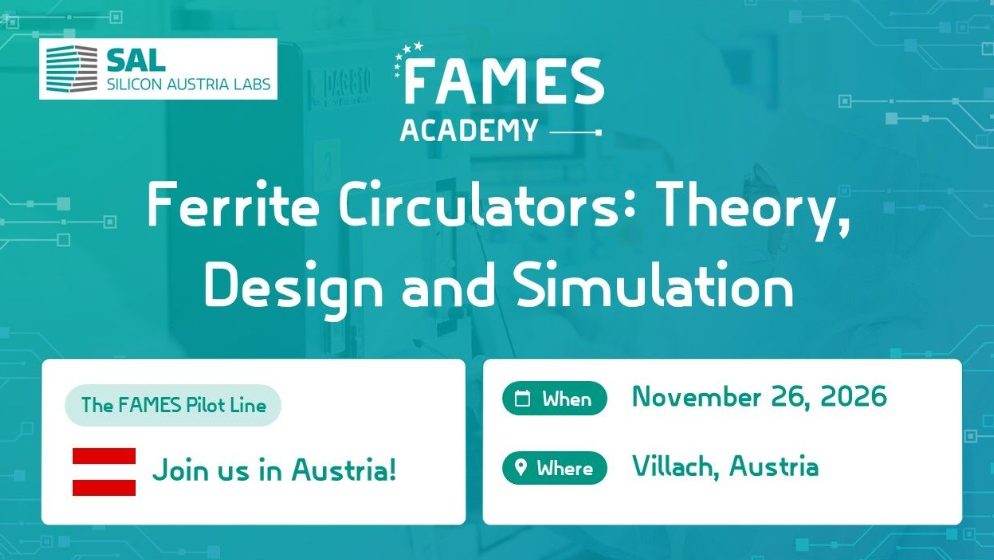
Training: Ferrite Circulators – Theory, Design and Simulation with Silicon Austria Labs
We are pleased to invite you to the one-day on-site training “Ferrite Circulators: Theory, Design and Simulation” on 26 November in Villach, delivered by Silicon Austria Labs as part of the FAMES Academy.
More

14. October 2026
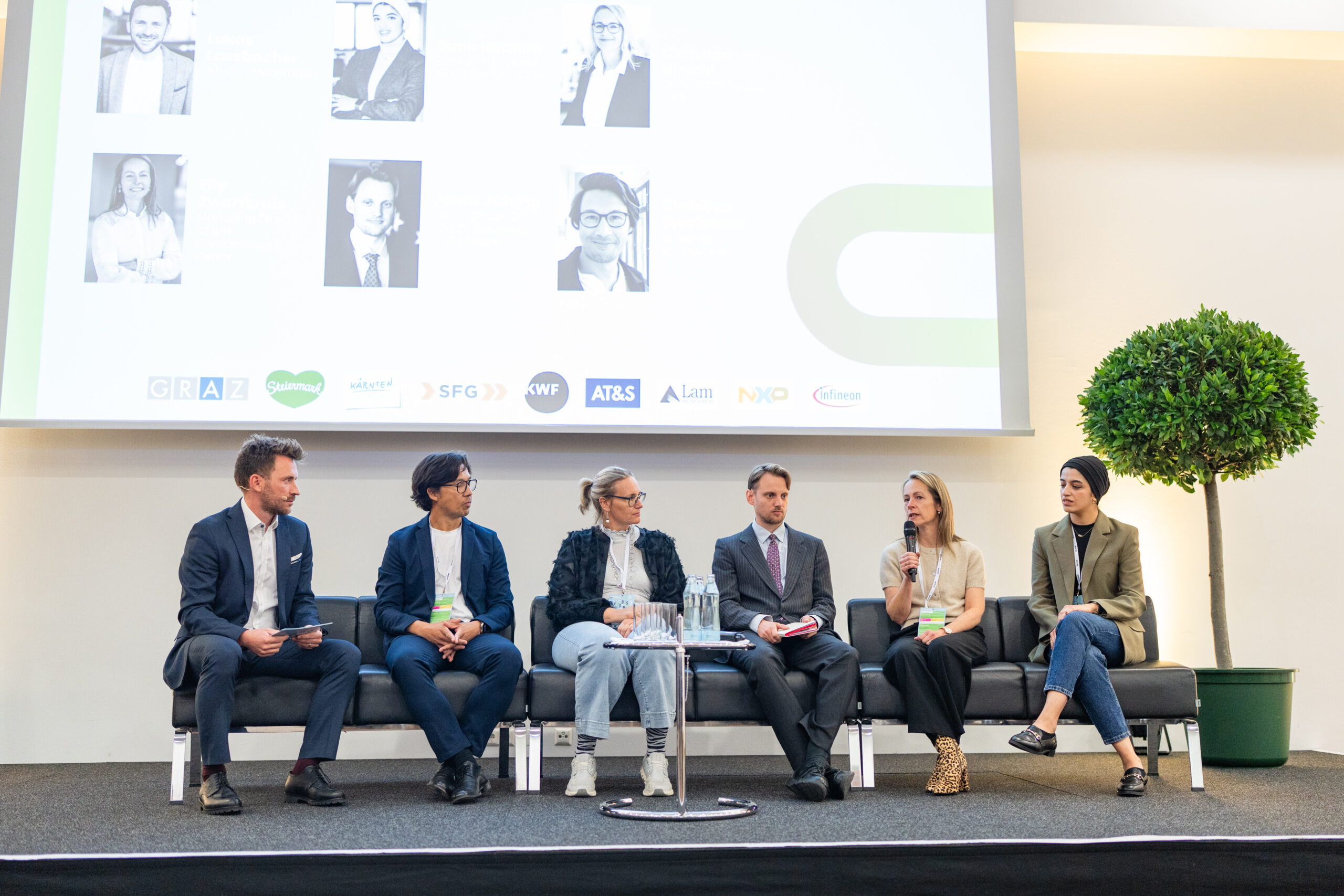
EBSCON 2026: ‘Crossroads – Europe at a Turning Point’ – a recap
Graz/Villach, 9 October 2026. Europe is at a turning point when it comes to semiconductors, AI and strategic technologies. EBSCON, the leading trade fair for the European semiconductor and electronics industry, held in Graz on 7 October 2026, was therefore themed ‘Crossroads – Europe at a Turning Point’.
More
10. September 2026
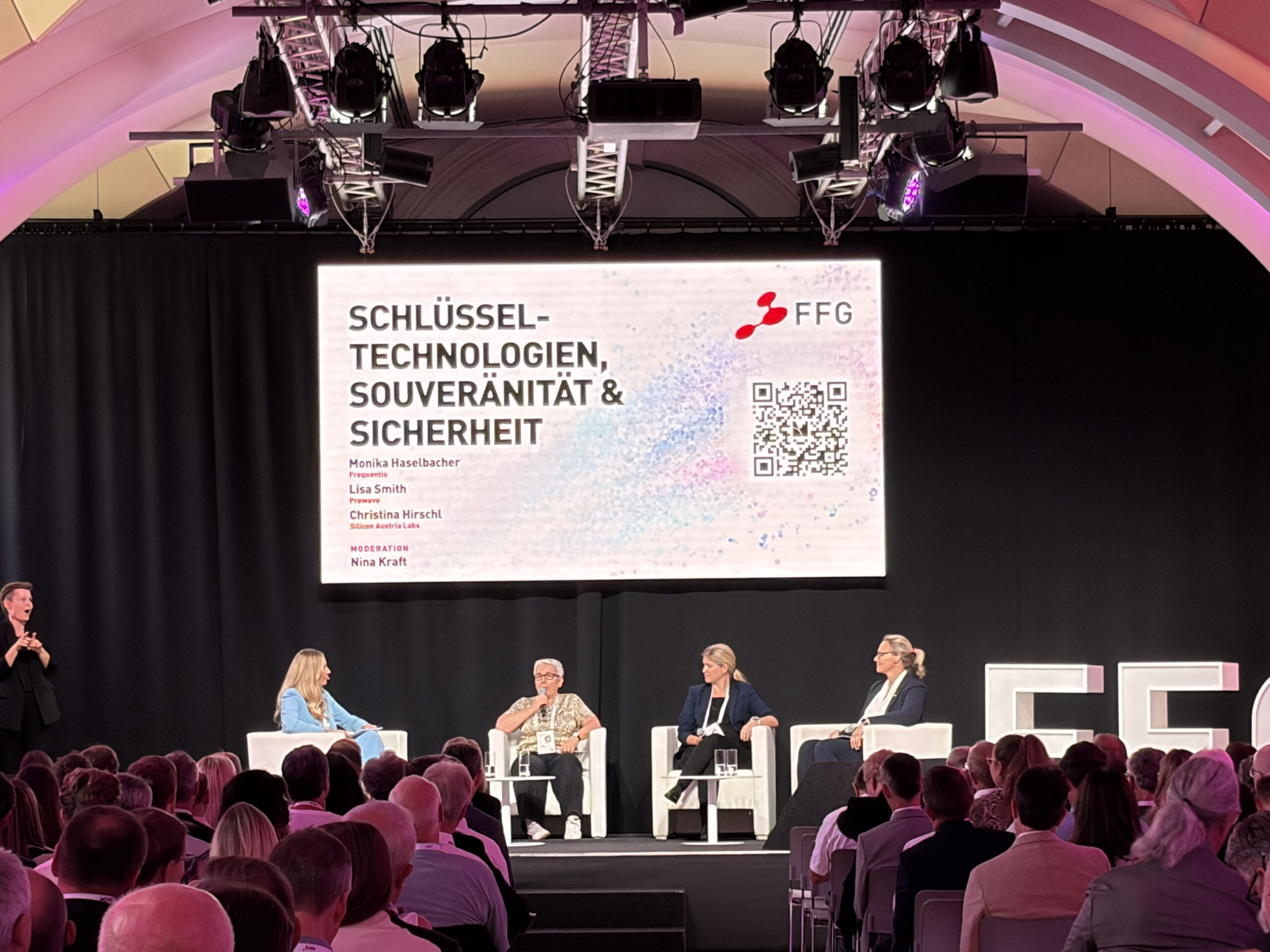
AT-C³ at FFG Forum 2026: Strengthening Austria’s Innovation and Technology Ecosystem
At the FFG Forum 2026 in Vienna, AT-C³ was represented by Lukas Lassbacher, who introduced the Austrian Chips Competence Center and represented its role within the European semiconductor and innovation ecosystem.
More

27. August 2026
Free Online Training Courses in the microelectronics field starting in October!
AT-C³ is officially launching its new training program in October 2026, offering free online courses for professionals, researchers, students and anyone interested in deepening their knowledge of microelectronics.
More
14. July 2026
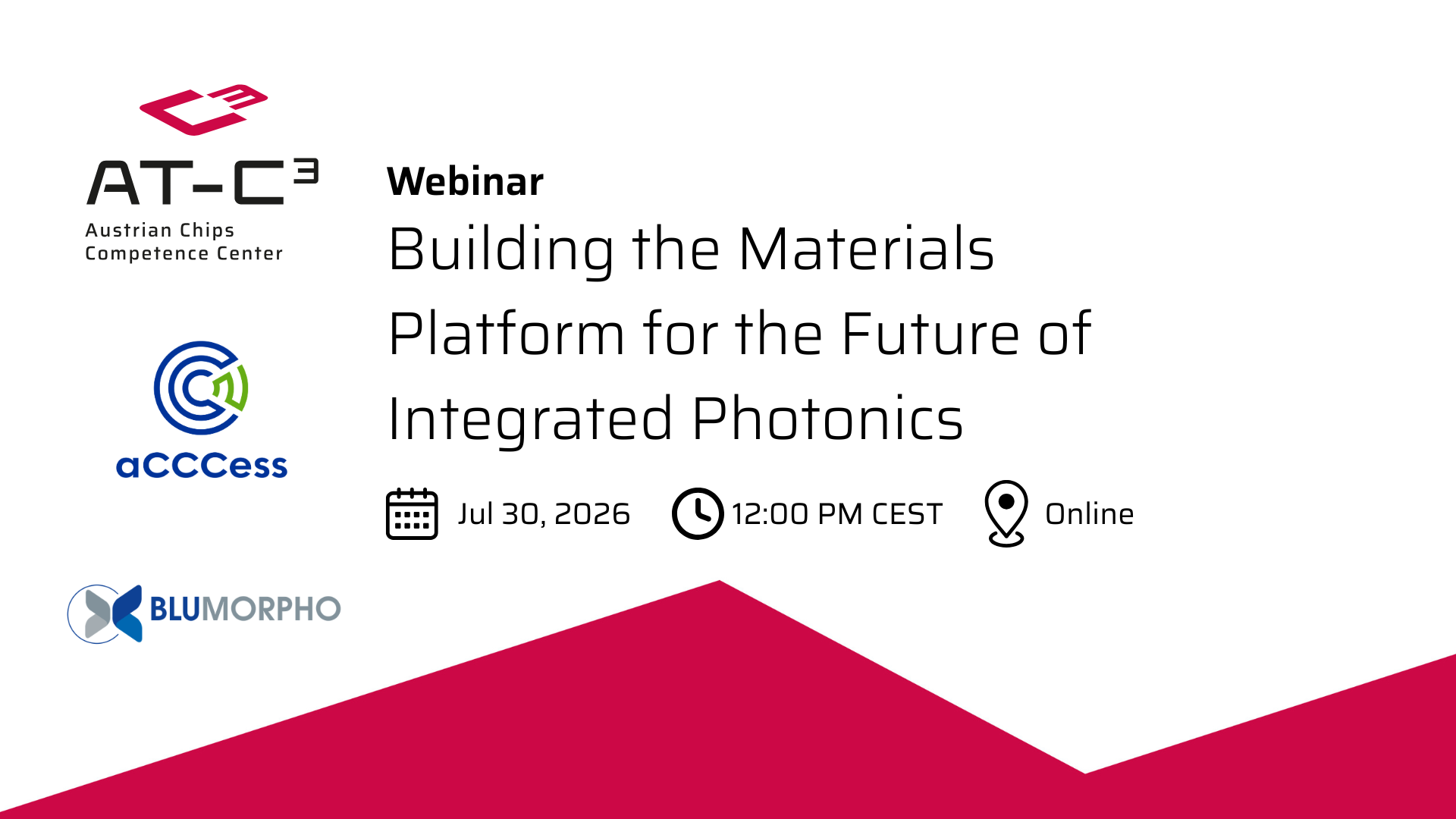
Webinar 30 July 2026: Building the Materials Platform for the Future of Integrated Photonics
In this Chips Think Tank webinar on July 30, 2026, Jean-Louis Guyaux, VP Technology at Riber, will share how one of Europe’s leading epitaxy equipment manufacturers is evolving from supplying MBE systems to enabling complete materials platforms for integrated photonics.
More
8. July 2026
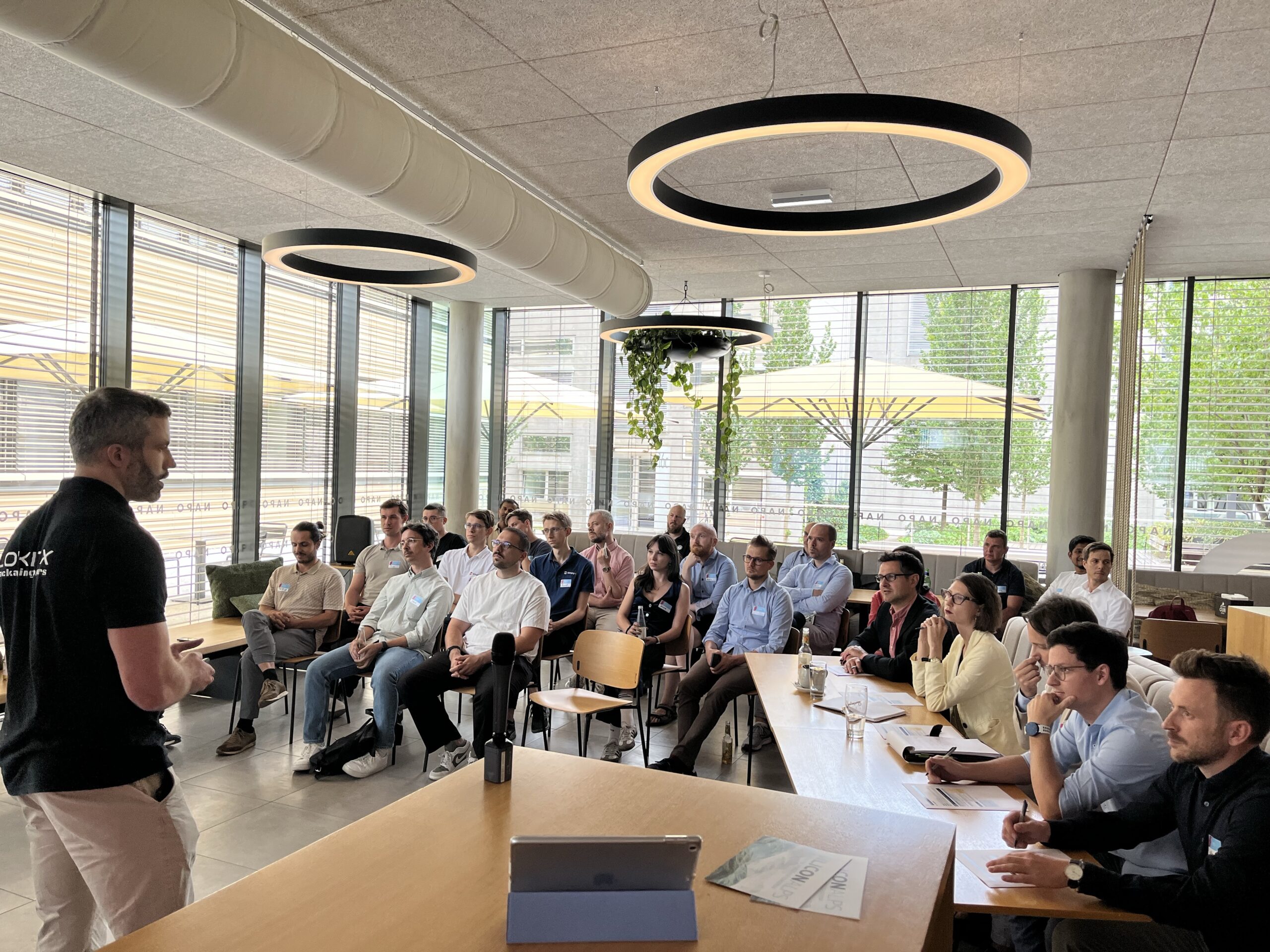
AT-C³ Joins the First Event of Intent to Foster Innovation & Startup Collaboration
AT-C³ was pleased to participate in the first Event of Intent at NAPO on the Campus Inffeld of the Graz University of Technology. The new networking format brought together around 40 participants from startups, scaleups and established companies with one clear goal: transforming conversations into concrete collaborations.
More
26. June 2026
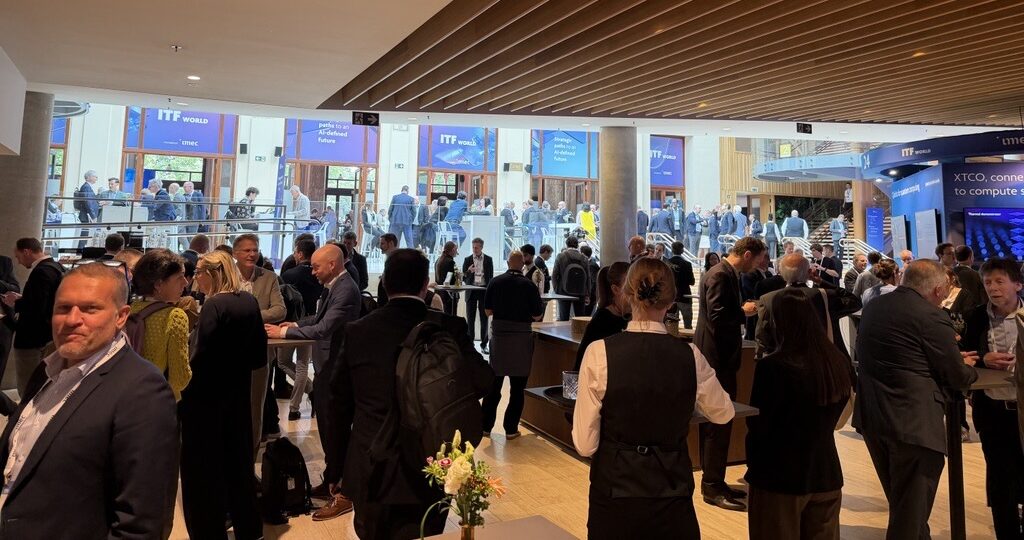
ITF World 2026 – A Recap
More than 2,000 international technology and AI leaders gathered in Antwerp for IFT World, organized by imec under the theme “Strategic paths to an AI-Defined Future.”
More
17. June 2026
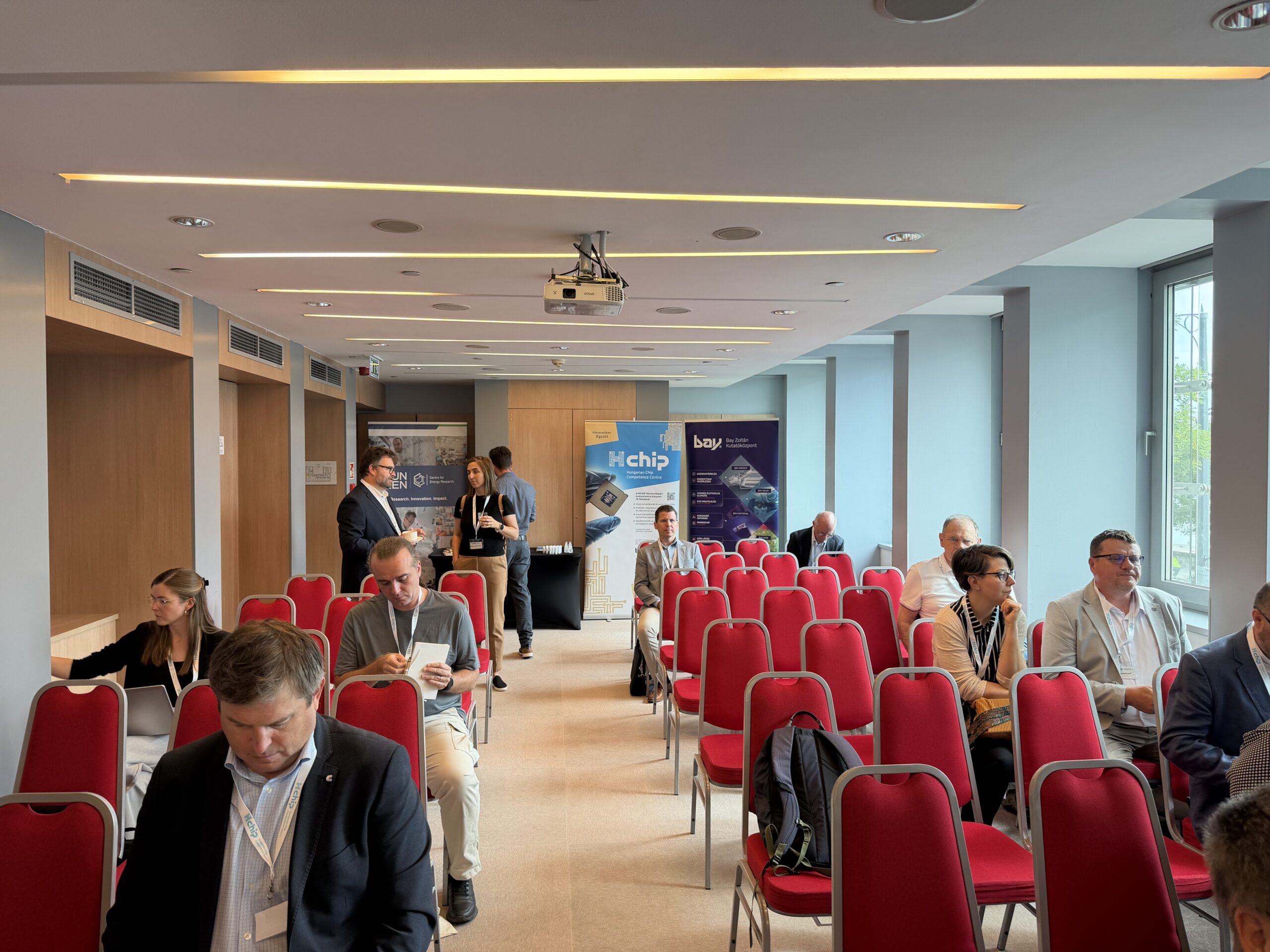
European Semiconductor Collaboration Days
On 4–5 June 2026, stakeholders from across the European semiconductor value chain gathered in Budapest for the European Semiconductor Collaboration Days 2026.
More
8. June 2026
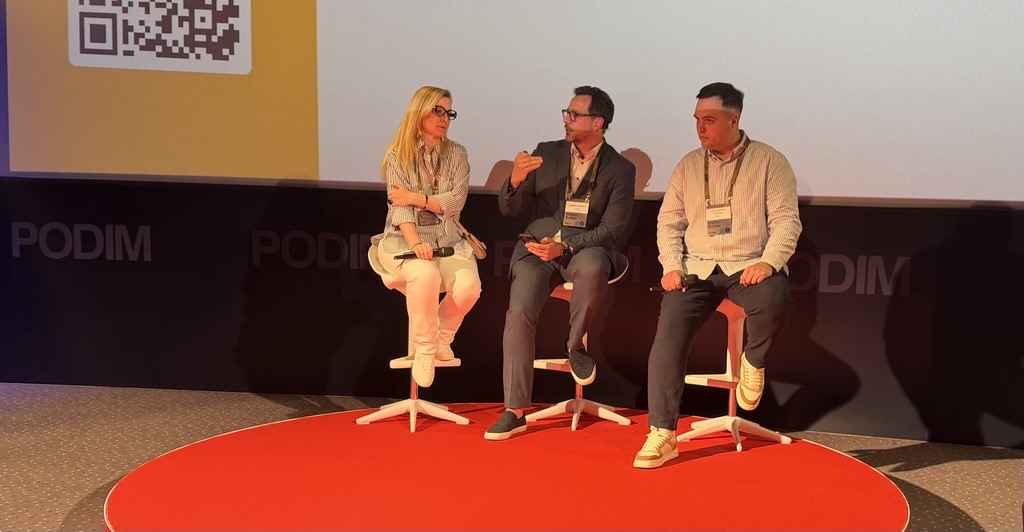
PODIM 2026 – A Recap
PODIM 2026 ran from May 11–13, with May 11 as a pre-conference day and May 12 and 13 as the two main conference days. The “second day” of the event proper is May 12. Here’s a breakdown of what happened, and how Infineon was involved.
More

10. January 2026
This was EBSCON 2025
The leading trade fair for the European semiconductor and electronics industry on October 8, 2025, was for the first time part of EBSCON WEEK and focused thematically on “Creative Destruction.” As part of EBSCON 5.0, representatives of European Chips Competence Centres (CCC) signed the “Declaration of Graz” to strengthen Europe-wide collaboration.
More
Trends Ticker
All dates and events at a glance.
Photonic Integrated Circuit (PIC) – Global Strategic Business Report: Capitalize on 19.7% CAGR to US$5.5 Billion by 2030 as Broadcom, Intel, Ciena, Infinera and Acacia Reshape the Market
Capitalize on rising demand for high-bandwidth, energy-efficient PICs across telecom, data centers, biosensing and lidar, with insights into tariffs,…
We are proud to announce that ams OSRAM’s Imaging-to-Display Sensing Solution has been adopted in vivo X500 Pro Max. Bringing together behind-OLED spectral sensing, multi-zone dToF depth sensing, and ambient spectrum and flicker detection, the solution supports a more natural and comfortable display, faster and more precise autofocus, and more stable, true-to-life image capture. This collaboration combines vivo’s expertise in mobile imaging, display, and device optimization with ams OSRAM’s leadership in advanced optical sensing. Together, we are transforming precision sensing at the component level into a flagship visual experience that users can see and feel. Learn more about how sensing is helping smartphones better understand light, color, and space. #amsOSRAMMobileWearables #sensors #mobileinnovation #mobiledisplay
STMicroelectronics reveals high-accuracy two-in-one altitude and underwater depth sensor for wearables and sports cameras
STMicroelectronics has combined altitude and underwater-depth monitoring over 50 meters in a single MEMS sensor that saves space, simplifies circuitry,…
Startschuss für digitale Drucktechnologien 🚀 Am 30. September 2026 haben wir am Lehrstuhl für Chemie der Kunststoffe an der Montanuniversität Leoben das Zentrum für digitale Drucktechnologien offiziell eröffnet – mit Gästen aus Forschung, Industrie und Öffentlichkeit. Lab-Touren, Live-Demos und Keynotes boten tiefe Einblicke in leitfähige Tinten, Sensorik und flexible Elektronik. Möglich gemacht durch eine Infrastrukturförderung von 1,5 Mio. Euro durch das Bundesministerium für Frauen, Wissenschaft und Forschung ( 1.084. 000 €) und die Montanuniversität Leoben (500.000 €), ist das Labor seit Frühjahr 2026 mit modernen Druckern und Verfahren ausgestattet – für die Erforschung, Entwicklung und Qualifizierung gedruckter elektronischer Bauelemente. Jetzt wurde es offiziell eröffnet. Danke an Thomas Grießer (Leiter des Lehrstuhls), Rektor Peter Moser, Alice Lassnig (Leiterin des Zentrums für Digitale Drucktechnologien und Arbeitsgruppenleiterin der Gruppe für Gedruckte Elektronik), Boris Buchroithner und Krzysztof Krawczyk, für Grußworte, Einordnung und Keynotes – und an alle Gäste für den intensiven Austausch beim Networking. #PrintedElectronics #AdditiveManufacturing #Digitaldruck #MaterialsScience #MontanuniversitätLeoben #Innovation #Sensorik #FlexibleElektronik #BMFWF #Kooperationen #Forschung
TDK stellt mit PositionSense™ Sensorlösungen für Wearables, Mobilgeräte, Roboter und weitere KI-gestützte Geräte vor
How can motion sensors become smarter while consuming less power and fewer resources? 📡 STMicroelectronics has introduced new 6 axis IMUs that combine motion sensing with embedded intelligence and a stronger focus on sustainability. The devices target applications including wearables, smart devices, industrial systems, and IoT products, helping developers process more sensor data locally while reducing power consumption.
Ernten verlässlich planen, Schneehöhen aus der Ferne vermessen, Kohlenstoff im Wald präzise erfassen: Im Klagenfurter Lakeside Park machen Unternehmen wie Avemoy, VUM und das E.C.O. Institut für Ökologie aus Sensordaten Entscheidungsgrundlagen für Landwirtschaft, Energiewirtschaft und Naturschutz. Den Weg in die Praxis ebnet die Nähe zu Forschung, Testinfrastruktur und Kapitalgebern direkt neben der Universität Klagenfurt. Mit seinem Standortmarketing macht das Land Kärnten diese Stärken national und international sichtbar, denn der Großteil der Wertschöpfung entsteht hier außerhalb des Tourismus. Den Link zum gesamten Beitrag finden Sie in den Kommentaren. Dieser Beitrag wurde mit finanzieller Unterstützung vom Amt der Kärntner Landesregierung ermöglicht.
Cross-Modal Sensor Data Segmentation Using Foot Pressure and Inertial Signals
When extracting features for activity recognition, applying a fixed-length sliding window without considering activity transition timing may result in multiple activities being included within a single window, potentially degrading recognition performance. To address this issue, we propose an activity segmentation framework centered on a foot-pressure-based segmentation method (FP). The framework further incorporates multiple segmentation strategies by combining the proposed foot-pressure-based method with a conventional spectral transition measure-based method (STM), and investigates their effects on subsequent activity recognition. Experimental results show that the FP and STM methods exhibit different activity-boundary detection characteristics. FP achieves higher precision, whereas STM provides higher recall, and combining the two methods increases boundary coverage. Activity recognition experiments further show that the effect of segmentation depends on the evaluation setting, and that adding foot-pressure features to the recognition model does not consistently improve recognition performance. These results demonstrate the potential of foot-pressure signals to provide boundary information that differs from inertial sensing and highlight the importance of evaluating their role in activity segmentation rather than simply treating foot-pressure data as additional recognition features.
The Silicon Photonics Foundry Layer: Who Can Actually Make a PIC
$TSEM $GFS $TSM $STM $UMC $SOI | Who fabricates the PIC, and why the bottleneck comes after the wafer
Camera manufacturers continuously strive to improve image quality, yet automatic white balancing (AWB) still struggles in challenging scenes and lighting conditions, often resulting in unnatural colors and inaccurate skin tones. A new generation of chip-scale multi-channel XYZ spectral sensors address this challenge by identifying the spectral signature of ambient light rather than estimating it from image content alone. The result is more accurate light source detection, improved color constancy, and true-to-life imaging across smartphones, smart glasses, and action cameras. Read more in our blog about: 🔹How spectral sensing solves true-to-life camera color constancy in challenging lighting conditions: 🔹Spectral sensors for automatic white balancing (AWB) enhance color consistency : https://lnkd.in/gwgus7Qx 🔹Download the white paper: https://lnkd.in/gsdvTAjS #SpectralSensing #ColorConstancy #MobileInnovation #TrueColor #amsOSRAMMobileWearables
Organ-on-a-chip technology approaches replacing animal testing
Archyde Non-animal methods, or NAMs such as organs-on-chips and computational simulations, are approaching technological readiness to replace animal testing in drug development. Despite shifting regulatory backing from the FDA and NIH, … Read More The post Organ-on-a-chip technology approaches replacing animal testing appeared first on Archyde.
Momentus Demonstrates AI-Enabled LiDAR and Imaging Suite During Successful On-Orbit RPO Mission with NASA Satellite
SAN JOSE, Calif.–(BUSINESS WIRE)–Momentus Inc. (NASDAQ: MNTS) (“Momentus” or the “Company”), a U.S. commercial space company specializing in satellite technology, space transportation, and in-orbit services, today announced the successful completion of a Rendezvous and Proximity Operations (RPO) demonstration by its Vigoride-7 Orbital Service Vehicle (OSV) utilizing low-cost commercial components for its sensor suite in a mission with a NASA satellite. The RPO demonstration showcased the Compa
New Wearable Sensor Can Detect Touch Without a Battery
Imagine a wearable sensor that feels a tap, uses the energy from that tap to power itself and briefly “remembers” what happened. Researchers in South Korea have built an experimental device that brings those functions together in a flexible piece of electronics. The device takes inspiration from the way the body senses touch. When your […]
Biosensors for Point-of-Care Diagnostics Market Insights, Competitive Landscape, and Forecast – 2033 | Connected Wearables and Home-Based Testing Unlock $27.6 Billion by 2033
Growth opportunities center on wearable and multiplexed biosensors, digital health integration, telemedicine, strategic partnerships, product innovation and regional expansion Growth opportunities center on wearable and multiplexed biosensors, digital health integration, telemedicine, strategic partnerships, product innovation and regional expansion
Hybrid Photonic Integrated Circuit Market Size, Share, Growth, and Forecast, 2026-2035 | AI, 5G, and Data Center Demand to Drive 13.6% CAGR and US$6.82 Billion Global Market
Capitalize on data centers, 5G, LiDAR and quantum photonics through silicon photonics innovation, operational efficiency and strategic partnerships Capitalize on data centers, 5G, LiDAR and quantum photonics through silicon photonics innovation, operational efficiency and strategic partnerships
Silicon photonics and InP photonic integrated circuit market to grow to $48bn by 2036
Acceleration of silicon photonics adoption requires simpler, externally modulated CW lasers
Calterah Turns UWB Digital Keys into In-Cabin Sensors
Calterah brings UWB keyless anchors into synchronized networks, delivering enhanced vehicle safety without adding expensive hardware. The post Calterah Turns UWB Digital Keys into In-Cabin Sensors appeared first on EE Times.
Infineon XENSIV™ TLx49012 Winkelsensoren ermöglichen Motorsteuerung-Selbstkalibrierung in Automotive- und Industrieanwendungen
Global Autonomous Systems and Vehicles Market Report 2027-2037 | Robotaxis, Autonomous Trucking, AI, Lidar, and eVTOL Unlock New Revenue Opportunities
Commercial momentum builds through robotaxi scale-up, corridor-based freight, strategic partnerships, sensor cost compression and cross-domain expansion. Commercial momentum builds through robotaxi scale-up, corridor-based freight, strategic partnerships, sensor cost compression and cross-domain expansion.
How can a humanoid robot see reliably when lighting conditions change? A robot working alongside people cannot depend on ideal illumination. It may need to operate in low light, distinguish subtle details or recognize materials that look like the human eye. Infrared emitters provide active illumination for low-light imaging. Ambient light and spectral sensors help the vision system understand its optical environment. Active spectroscopy and photodetectors can go further, enabling application-specific analysis of the spectral signature of materials. For robot manufacturers, this means designing perception systems that are not limited to what human vision can detect. See how ams OSRAM optical technologies support perception in human-centered environments: #amsOSRAM #HumanoidRobots #Robotics #DigitalPhotonics #OpticalSensing #infraredLED
What a remarkable week for ams OSRAM in Michigan for the automotive industry! From engaging with industry leaders at SID Vehicle Displays and Interfaces Conference, to hosting our Automotive Interior Lighting and Sensor Technology Seminar and bringing professionals together through our Women in Automotive Lighting Leadership (WALL)networking event. Every conversation reinforced a common vision: creating smarter, safer, and more human-centric mobility experiences. A sincere thank you to everyone who joined us, shared insights, and contributed to the discussions. Together, we're shaping the next generation of intelligent in-cabin experiences and automotive innovation. #amsOSRAM #AutomotiveLighting #InCabinSensing #AutomotiveTechnology #SmartVehicles #DisplayTechnology
Was treibt Forscherinnen und Forscher an? 🔎Michael Somma im APA Science Interview 👨🔬 Unser #Nachwuchsforscher Michael Somma vom Institut DIGITAL wurde von APA Science porträtiert. 🎓️ Der 32-jährige Doktorand beschäftigt sich mit einer hochaktuellen Frage: Wie kann künstliche Intelligenz dazu beitragen, kritische Infrastruktur wie unsere Wasserversorgung vor Cyberangriffen zu schützen❓️ 💥 Dabei verbindet er komplexe Systemtheorie mit KI-Methoden. Ziel sind Modelle, die Abweichungen in #Sensordaten erkennen, gleichzeitig aber weniger rechenintensiv und besser nachvollziehbar sind – ein wichtiger Punkt, wenn KI in sicherheitskritischen Bereichen eingesetzt wird. 🔛 Er arbeitet am theoretischen Modell bis zur konkreten #Anwendung in der Praxis. 🙋♂️ Michael Somma: „Ich habe in mich reingespürt und festgestellt, dass ich ein Forschertyp bin. Ein ehemaliger Uniprofessor hat mich dabei inspiriert. Er hat oft gesagt, dass es 2 Arten von Menschen gibt: Die einen sind angetrieben von Dingen, die sie wissen, die anderen von Dingen, die sie nicht wissen. Ich zähle mich klar zur zweiten Gruppe.“ Quelle: Interview mit APA Science 👉 Das ganze Porträt bei APA Science nachlesen: „Angetrieben von Unbekanntem“ JOANNEUM RESEARCH DIGITAL #JOANNEUMRESEARCH
PPI 2026 – Thank you for four inspiring days in Leoben ✨ From September 1–4, 2026, “PPI 2026 – Polymer Process Innovation” gathered experts from 9 countries ? at Montanuniversität Leoben. The programme featured 1 plenary lecture, 7 keynotes, 35 talks, 13 posters, and 1 panel discussion. Highlights: Sustainable Polymers ♻️: circular economy, recycling, LCA, bio-based/biodegradable materials Smart Polymers🧠: function integration, sensors, functional surfaces, hybrid processes Digital Polymer Science💻: ML, simulation/digital twins, real-time control, AI-driven QA Get the Book of Abstract here A big thank-you to all authors, reviewers, session chairs, the Scientific & Organising Committees, our hosts at@ Montanuniversität Leoben, and our partners and sponsors. Your support made PPI 2026 possible! #PPI2026 #PolymerEngineering #Innovation #SustainablePolymers #SmartPolymers #DigitalTwin #AI #Leoben #Montanuniversitaet #Conference
🛰️ Fieldwork for tomorrow's robots 🤖: out and about with a LiDAR backpack🎒 and 360° camera. 🥾 How do autonomous robots learn to navigate safely❓️ 🔑 Autonomous outdoor robot navigation is considered a key technology for Europe's digital and sustainable future – and it's especially challenging in🍇 viticulture: robots need to navigate predefined paths through vineyards, even as conditions constantly change due to growth cycles, seasonal variation, and shifting ground conditions. 🌿🍂 Over the past months, the #DigitalTwin Lab team at JOANNEUM RESEARCH DIGITAL has been out in the field with a backpack-mounted LiDAR system and a 360° camera as part of the 𝐒𝐄𝐀𝐒𝐎𝐍-𝐓𝐰𝐢𝐧 project – across multiple seasons, to capture how the environment changes over the course of the year. 🌱🍂❄️ 🔛 The key question: how can these 3D scans be turned into a #DigitalTwin that captures the spatial layout as well as seasonal changes of real outdoor environments accurately enough for autonomous robots to learn to navigate safely within it❓️ From the collected point clouds, the team carried out semantic information recovery — segmenting, classifying, and annotating the environment. One direct result: a cost map for #RobotNavigation, which will form the basis for safe and efficient path planning in the digital twin going forward. 🗺️🤖 ▶️ The animation shows how the captured environment changes across the seasons – a key building block for realistic, dynamic simulation scenarios, which will increasingly be generated using generative AI and procedural 3D modeling. More on the simulation methodology and on uncertainty modeling for improved context-awareness in robot navigation coming soon from JOANNEUM RESEARCH ROBOTICS – stay tuned! 🔜 With Sebastian Wurm and Benjamin Breiling 💥 More about the project: #LiDAR #Robotics #AI #Research #Innovation #3DReconstruction #AutonomousSystems
What if your alarm clock could do a lot more than just wake you up? ⏰ Our partner Seekwon turned that idea into reality with ClookC, a smart clock powered by Infineon's XENSIV™ 60 GHz radar sensor. ✨ No wearables required 💤 Contactless sleep, respiration, and heart rate tracking 🙋 Wave your hand to snooze or stop the alarm 🔒 Privacy-friendly AI processing directly on the device And because technology should be fun, ClookC combines smart health features with an engaging, interactive user experience. A great example of how radar technology is transforming everyday devices into smarter, more intuitive companions. Your alarm clock might soon become your favorite health gadget. 😍 Read more here: 🔎


Submit your project idea now and shape the future.
Use our submission form to bring your innovation to AT-C³ – we’ll support you from concept to realization.