
NEWS & EVENTS FROM AT-C³
Updates & Insights from AT-C³
Discover information on project progress, achieved milestones, research activities and events from AT-C³.
15. October 2026
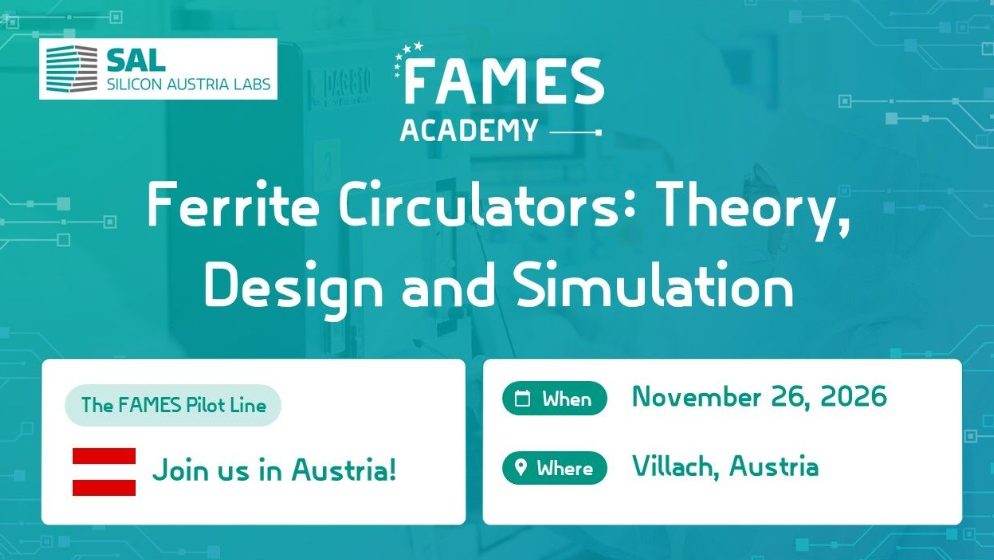
Training: Ferrite Circulators – Theory, Design and Simulation with Silicon Austria Labs
We are pleased to invite you to the one-day on-site training “Ferrite Circulators: Theory, Design and Simulation” on 26 November in Villach, delivered by Silicon Austria Labs as part of the FAMES Academy.
More

14. October 2026
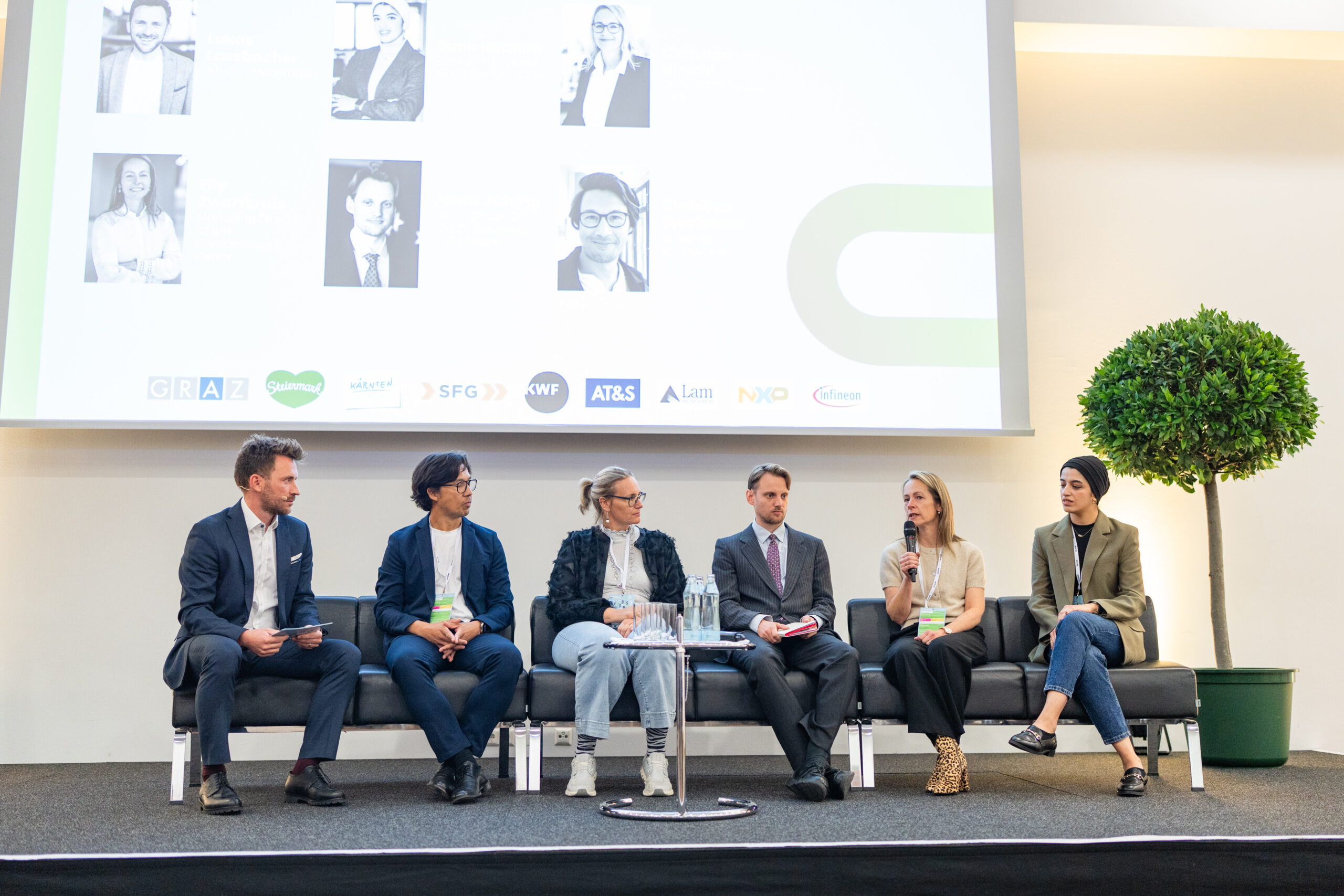
EBSCON 2026: ‘Crossroads – Europe at a Turning Point’ – a recap
Graz/Villach, 9 October 2026. Europe is at a turning point when it comes to semiconductors, AI and strategic technologies. EBSCON, the leading trade fair for the European semiconductor and electronics industry, held in Graz on 7 October 2026, was therefore themed ‘Crossroads – Europe at a Turning Point’.
More
10. September 2026
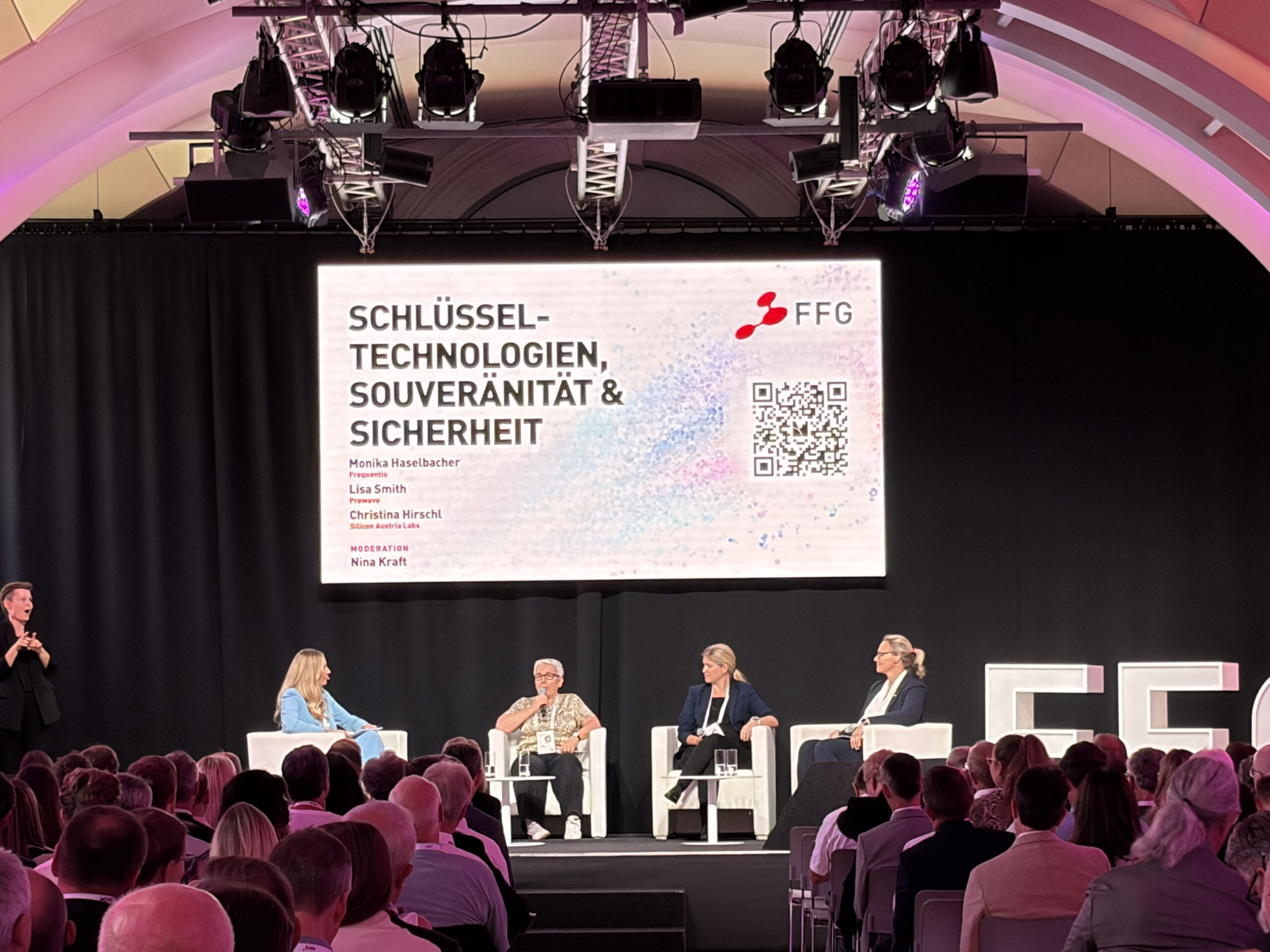
AT-C³ at FFG Forum 2026: Strengthening Austria’s Innovation and Technology Ecosystem
At the FFG Forum 2026 in Vienna, AT-C³ was represented by Lukas Lassbacher, who introduced the Austrian Chips Competence Center and represented its role within the European semiconductor and innovation ecosystem.
More
27. August 2026
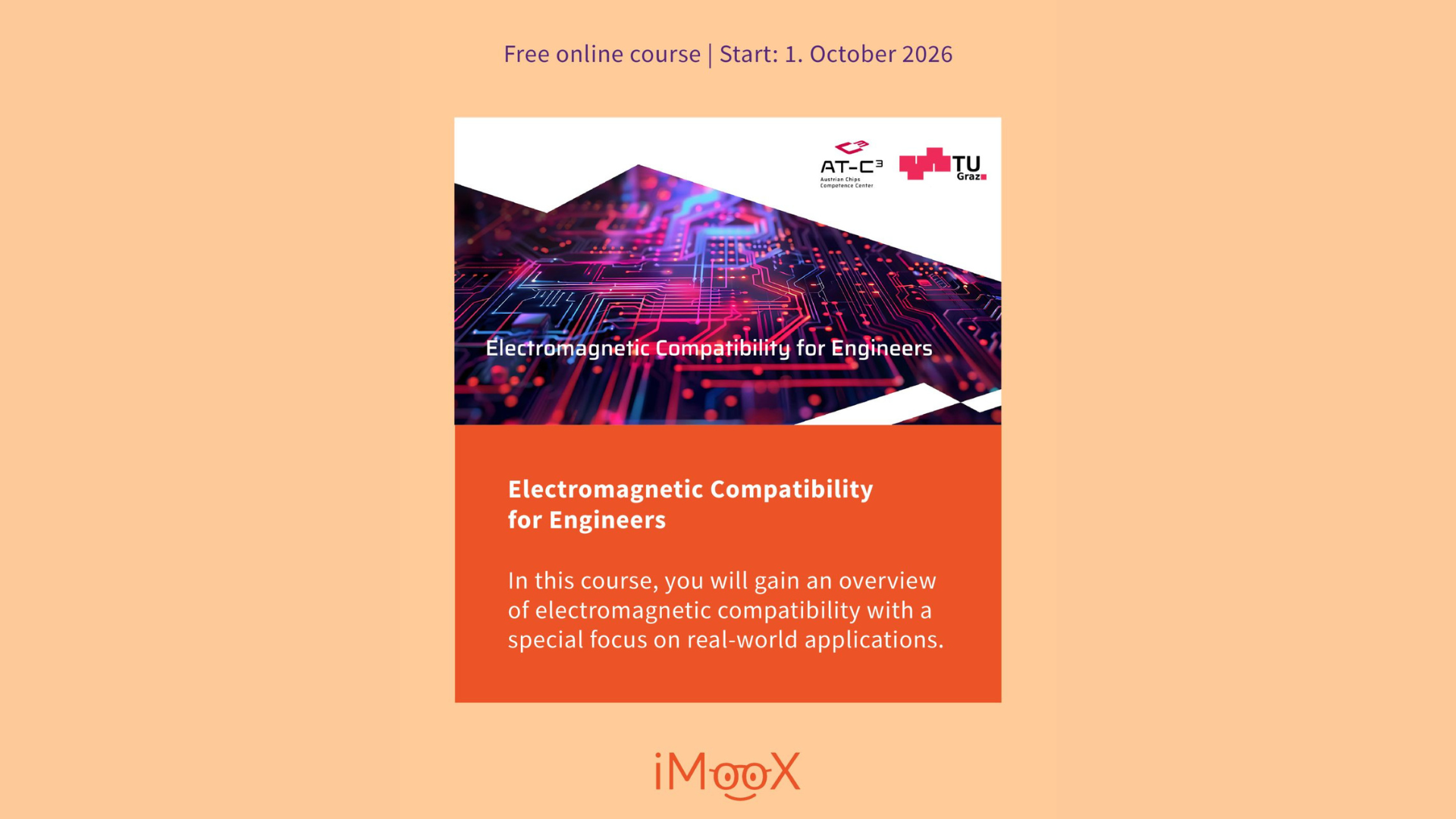
Free Online Training Courses in the microelectronics field starting in October!
AT-C³ is officially launching its new training program in October 2026, offering free online courses for professionals, researchers, students and anyone interested in deepening their knowledge of microelectronics.
More
14. July 2026
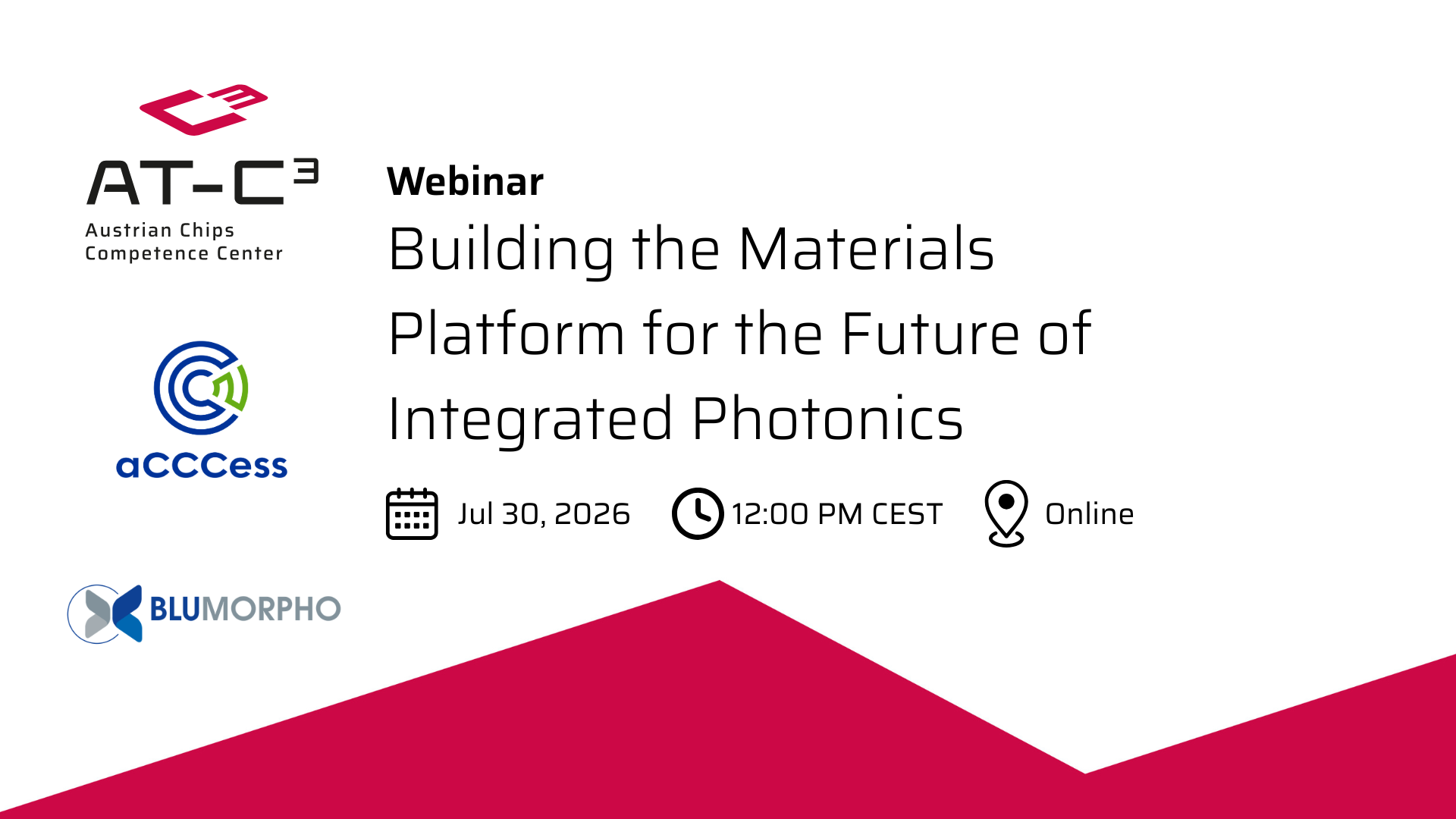
Webinar 30 July 2026: Building the Materials Platform for the Future of Integrated Photonics
In this Chips Think Tank webinar on July 30, 2026, Jean-Louis Guyaux, VP Technology at Riber, will share how one of Europe’s leading epitaxy equipment manufacturers is evolving from supplying MBE systems to enabling complete materials platforms for integrated photonics.
More
8. July 2026
AT-C³ Joins the First Event of Intent to Foster Innovation & Startup Collaboration
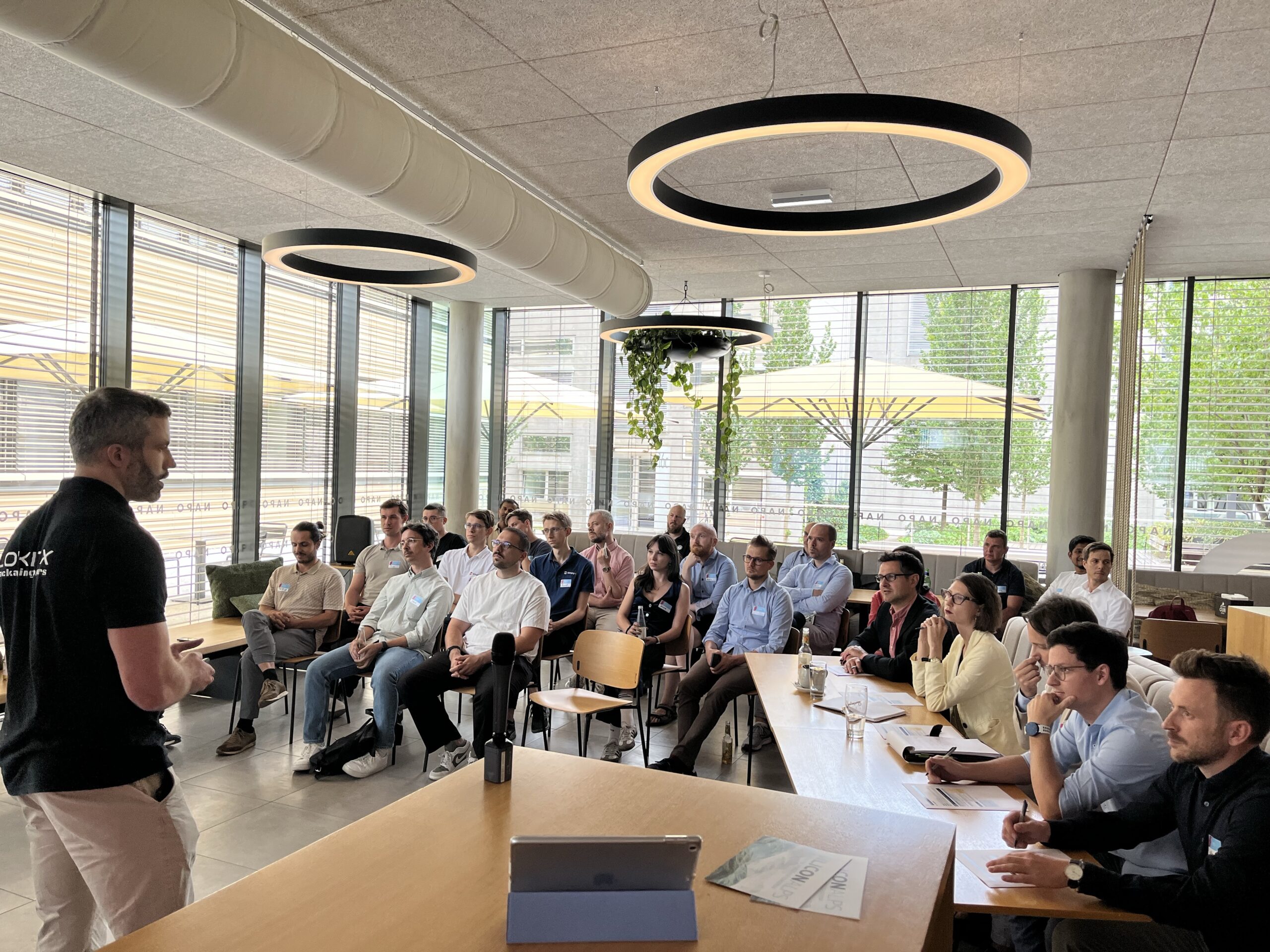
AT-C³ was pleased to participate in the first Event of Intent at NAPO on the Campus Inffeld of the Graz University of Technology. The new networking format brought together around 40 participants from startups, scaleups and established companies with one clear goal: transforming conversations into concrete collaborations.
More

26. June 2026
ITF World 2026 – A Recap
More than 2,000 international technology and AI leaders gathered in Antwerp for IFT World, organized by imec under the theme “Strategic paths to an AI-Defined Future.”
More
17. June 2026
European Semiconductor Collaboration Days
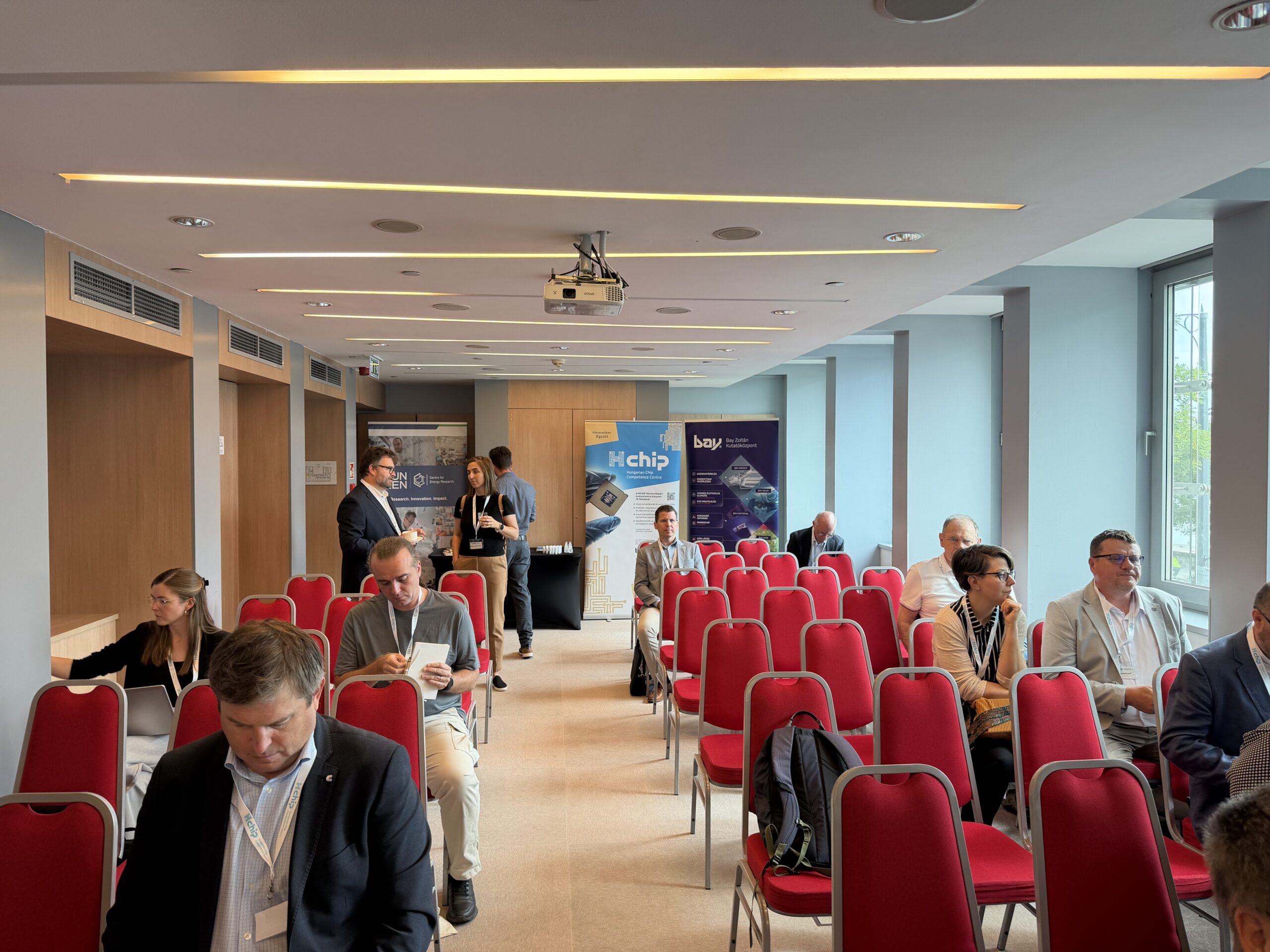
On 4–5 June 2026, stakeholders from across the European semiconductor value chain gathered in Budapest for the European Semiconductor Collaboration Days 2026.
More
8. June 2026
PODIM 2026 – A Recap
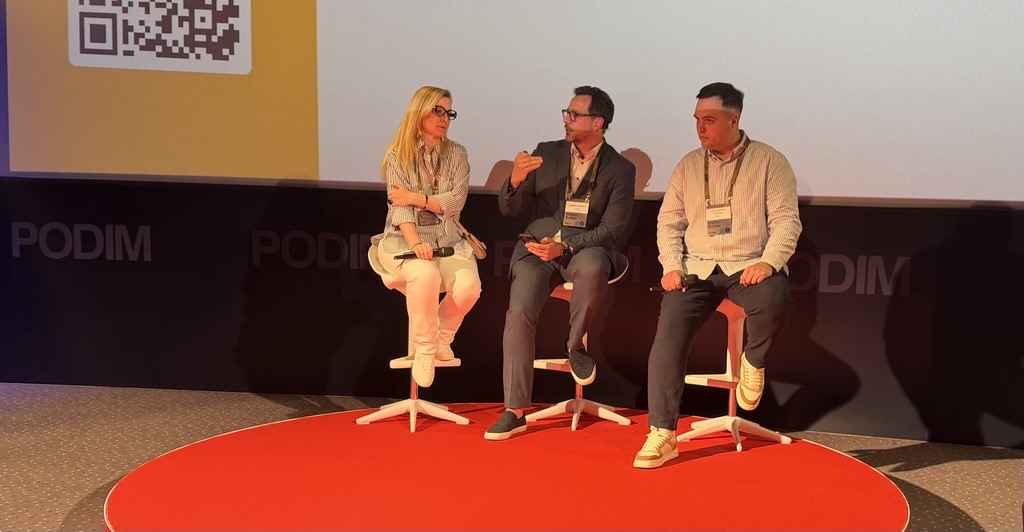
PODIM 2026 ran from May 11–13, with May 11 as a pre-conference day and May 12 and 13 as the two main conference days. The “second day” of the event proper is May 12. Here’s a breakdown of what happened, and how Infineon was involved.
More

10. January 2026
This was EBSCON 2025
The leading trade fair for the European semiconductor and electronics industry on October 8, 2025, was for the first time part of EBSCON WEEK and focused thematically on “Creative Destruction.” As part of EBSCON 5.0, representatives of European Chips Competence Centres (CCC) signed the “Declaration of Graz” to strengthen Europe-wide collaboration.
More
Trends Ticker
All dates and events at a glance.
Kritische Codeausführung: GitLab veröffentlicht dringende Sicherheitsupdates
Mit Updates für mehrere Versionszweige schließt GitLab zwölf Sicherheitslücken, darunter auch eine kritische Lücke zur Remote-Codeausführung.
MoniRail secures share of £50 million Government investment in quantum tech – Rail UK
MoniRail secures share of £50 million Government investment in quantum tech – Company News
Was die PHP-Sicherheitslücke für das Internet bedeutet
Die PHP-Lücke: Notfall-Updates sind verfügbar, doch weltweit suchen Angreifer weiter nach ungeschützten Servern. Wann kann bei der PHP-Sicherheitslücke Entwarnung gegeben werden?
Chinese AI Tool ARTEX Can Breach Security in 15 Seconds, Test by Tokyo Cybersecurity Firm Reveals
Microsoft Uncovers AI-Driven Global Cyber Attack on ConnectWise by Chinese-Linked Hackers
A Chinese state-aligned hacking group has compromised IT services firm ConnectWise using an AI-driven penetration testing tool, targeting hundreds of – Get the latest breaking news and top stories from Sri Lanka, the latest political news, sports news, weather updates, exam results, business news, entertainment news, world news and much more from News 1st, Sri Lanka’s leading news network.
U.S. AI Security Posture Management Market 2026-2033: Rising Enterprise AI Risks Create New Cybersecurity Oppo
The U S AI Security Posture Management Market is gaining attention as organizations seek greater visibility and control over their expanding AI environments From generative AI assistants to machine learning models embedded in business applications enterprises are introducing new technologies …
IT-Experte zur Sicherheitslücke: „Schäden weltweit im zigfachen Millionenbereich“
Eine weltweite Cyber-Warnung sorgt auch in Deutschland für massive Störungen: Wegen gefährlicher Sicherheitslücken in der Web-Programmiersprache PHP habe…
Websites Down: What Is PHP And How Has It Raised AI Hacking Fears?
Artificial intelligence has found critical security flaws in a major programming language called PHP, with many websites taken offline Thursday as organisations worldwide scramble to fend off would-be hackers.
Post-Quanten-Kryptografie: Industrie muss jetzt handeln
(Bild: MTG) Quantencomputer bedrohen RSA/ECC in OT und Industrieanlagen. Warum Post-Quanten-Kryptografie und flexible Security heute nötig sind.
Niemand hat der SPS von Post-Quanten-Kryptografie erzählt
Post-Quanten-Kryptografie: Eine heute gekaufte Industriesteuerung könnte 2046 noch laufen. Ob sie sich nachrüsten lässt?
Post-Quantum Cryptography and Data Protection: Legal and Ethical Implications for Global Cybersecurity
What Is Q-Day? Post-Quantum Cryptography (PQC) Explained
Q-Day is the cybersecurity term for the moment quantum computers become powerful enough to break today’s main public key encryption systems, including RSA and elliptic curve cryptography (ECC). Nobody can put a date on it yet, but recent research suggests… The post What Is Q-Day? Post-Quantum Cryptography (PQC) Explained appeared first on Security Boulevard.
BitRipple and Eclypses Partner to Deliver Accelerated, Post-Quantum Resilient Data Protection for Challenging Networks
BERKELEY, Calif. & BOSTON–(BUSINESS WIRE)– #BitRipple–BitRipple and Eclypses partner to combine post-quantum data protection with accelerated, resilient transport for secure, reliable communications.
Siemens Software Center: Sicherheitslücke aktiv ausgenutzt
Achten Sie auf die Sicherheitslücke im Siemens Software Center: Schadsoftware wird aktiv über Version 3.5.8.7 verbreitet.
F.A.Z. Frühdenker: Rätselraten nach dem Hackerangriff auf die AfD
Ein neues Ticketsystem soll das Fahren mit Bus und Bahn smarter machen, im Netz kursieren Daten aus dem AfD-Hack, die EU will sich in der Arktis behaupten. Und in der Champions League treffen die Bayern und Leipzig auf Hochkaräter. Der F.A.Z. Frühdenker.
Accenture, Dragos launch $10M utility cybersecurity initiative
Are Systems Ready for Quantum-Resistant Cybersecurity?
Overview: Quantum computing could eventually threaten widely used public-key encryption methods, putting sensitive business data and digital communications at r
New cybersecurity challenges are on the horizon; will the world be ready?
A hacked robot assistant gathers intel to steal the identity of a senior in a care facility. A caller with a deepfake of a loved one’s voice begs a family member to pay a ransom to a “kidnapper.” A compromised car sensor prevents it from braking safely.Cybersecurity is a shifting landscape, and new technologies, for all their promise, can also threaten new nightmare scenarios.
Constella Intelligence and Aquila Deep Intel Announce Strategic Partnership to Advance Cyber Threat
The partnership combines Constella Intelligence’s extensive cyber intelligence data assets with Aquila Deep Intel’s regional expertise.
DORA: Was Finanzunternehmen bei Kryptografie und PKI nachweisen müssen
Bis Ende 2026 sollen alle EU-Mitgliedstaaten mit der Umstellung auf Post-Quanten-Kryptografie begonnen haben.
AI Learns to Spot Cyberattacks With Almost No Labeled Data
Researchers have developed a semi-supervised, domain-adaptive intrusion detection algorithm that combines mutual-information-maximizing adversarial networks with uncertainty-aware pseudo-labeling to
Machine Learning Shows Promise Against Campus Cyberattacks, But Evidence
A systematic review of 200 studies finds machine learning effective for detecting DDoS and ARP spoofing attacks on university networks, but warns that evaluation gaps and limited real-world testing
Aus für Phishing-SMS in Österreich: RTR schaltet „textbasierte“ SMS-Absenderkennungen frei ⋆ TOP News Österreich – Nachrichten aus Österreich und der ganzen Welt
Auf TOP News Österreich erfahren jetzt schnell und aktuelle alles was in Österreich und der Welt passiert – kurz und direkt!
The Quantum Security Transition: A Policy Agenda for Post-Quantum Readiness in Asia Pacific – EUROPE SAYS
Encryption is a quiet foundation of digital trust. It protects government services, financial transactions, critical infrastructure, healthcare records,
HSZ-BW: Cyberangriff legt Bewerbungsportale und Hochschulverwaltung lahm
Der Angriff vom 7. Oktober beeinträchtigt Verwaltungsdienste und Bewerbungen an mehreren Hochschulen; Umfang eines möglichen Datenabflusses wird untersucht.


Submit your project idea now and shape the future.
Use our submission form to bring your innovation to AT-C³ – we’ll support you from concept to realization.